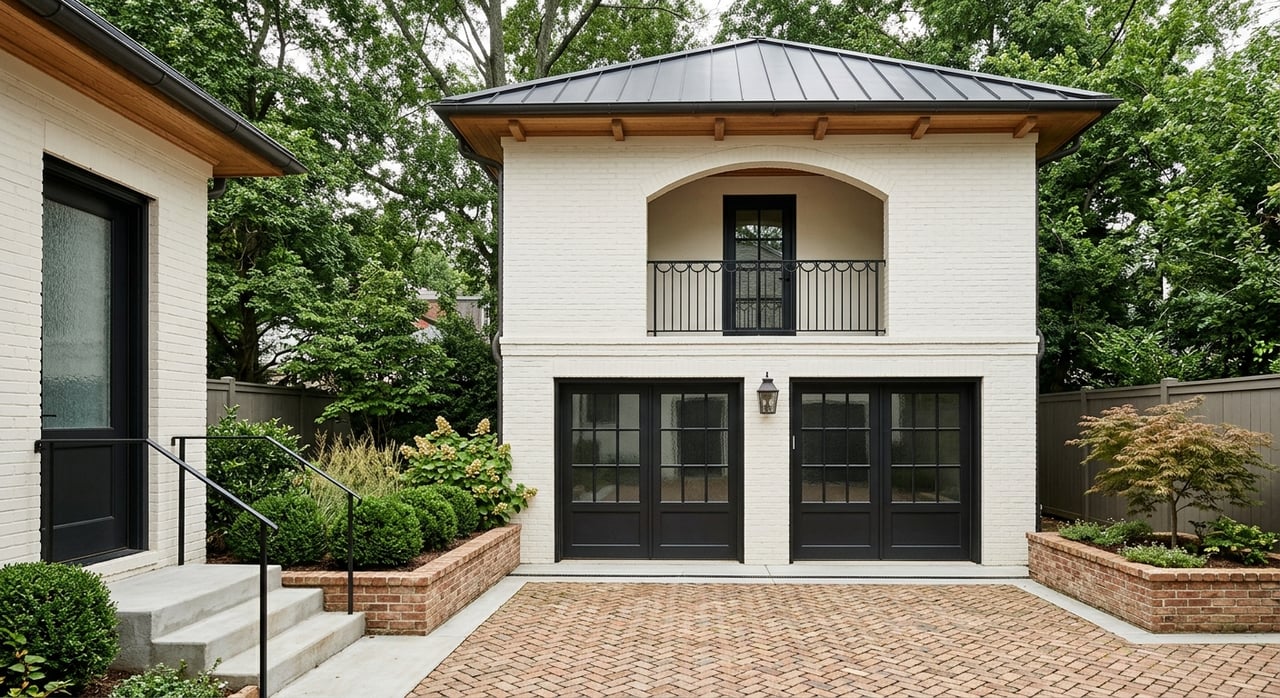
What to Evaluate in a 12 South Nashville Investment Property
May 21, 2026
May 21, 2026
If you are thinking about buying in 12 South, the appeal is easy to see. This part of Nashville offers a rare mix of neighborhood character, walkable daily conveniences, and close access to major job and education centers. But for an investment purchase, charm alone is not enough. You need to look closely at pricing, rental potential, zoning, renovation limits, and long-term holding costs before you commit. Let’s dive in.
12 South is part of the broader 12th Avenue South corridor, which Metro describes as a mixed-use shopping, dining, and residential district connecting Belmont-Hillsboro, Waverly-Belmont, Sunnyside, and 12South. That mix helps support year-round demand from buyers and renters who want convenience and a connected lifestyle.
The location also benefits from strong access to Downtown Nashville, the Gulch, Belmont University, and Vanderbilt University. Metro improvements along 12th Avenue South include protected bike lanes, upgraded bus stops, and safer crossings, while Sevier Park Community Center adds trails, fitness space, playgrounds, and community amenities. For buyers evaluating long-term appeal, those features matter.
12 South also has a more watchful planning environment than many suburban markets. The local neighborhood association specifically focuses on historic preservation, appropriate development, zoning, and codes compliance. That does not make investing impossible, but it does mean you should expect more scrutiny around changes to a property.
Before you run projections, start with the reality of current pricing. Public market snapshots from spring 2026 place the median sale price around $1.18 million in 12 South, with reported median days on market between 62 and 81 days, depending on the source.
That points to a premium market with a slower pace than many buyers expect when they hear the neighborhood name. In practical terms, you may have more time for due diligence than in a fast-moving market, but your basis will still be high. Patience matters on both the buy side and the resale side.
Realtor.com also reported a median listing price of $1.45 million in April 2026. That spread between listing and sold pricing is worth noting. It suggests buyers should be careful not to underwrite based on aspirational asking prices.
If your strategy includes long-term rental income, 12 South has encouraging signals. Realtor.com’s April 2026 rental snapshot showed 14 rental properties, a median rent of $4,900 per month, and a year-over-year rent increase of 30.67%.
That said, strong rents do not automatically mean strong cash flow. In a neighborhood with high acquisition costs, insurance, taxes, financing terms, and maintenance can quickly eat into returns. A property can still be a smart buy, but only if the numbers work under conservative assumptions.
Current public rental listings also show a wide range. Houses in roughly the 3- to 5-bedroom range were listed from about $4,500 to $8,850 per month. That tells you layout, finish level, parking, and exact location within the neighborhood can materially affect income potential.
One of the most important things to evaluate in 12 South is the kind of property you are buying. The neighborhood does not offer a single, uniform housing product. Public examples range from a 1-bedroom, 1-bath condo around 710 square feet priced near $355,000 to large 5- to 7-bedroom single-family homes selling in the $2.6 million to $3.7 million range.
That variety creates multiple entry points, but each comes with a different investment profile. A smaller attached unit may offer simpler upkeep and a more lock-and-leave setup. A larger home may support premium rent or stronger resale value, but it usually comes with higher carrying costs and more property management needs.
When you compare options, ask a basic question: Who is this property most likely to serve well over the next five to ten years? If the answer is not clear, the investment thesis may need more work.
Many buyers are drawn to 12 South because older homes can offer value-add upside. That can be true, especially when the opportunity is tied to interior updates, kitchen and bath improvements, better systems, or a smarter floor plan.
What you should not assume is that every property can be expanded in a major way. The area’s historic character, existing lot patterns, and zoning framework can limit what is practical or permitted. In many cases, the best improvements are the ones that fit the lot, respect the streetscape, and align with the surrounding neighborhood form.
This is where disciplined planning matters. If you are buying for renovation, make sure your returns do not depend on an aggressive expansion that may not be approved.
In a lifestyle-driven neighborhood, buyers sometimes focus so much on the main commercial strip that they overlook daily livability. Metro has noted that growth around 12th Avenue South has created parking and noise concerns in nearby residential areas.
That makes micro-location especially important. A home with functional on-site parking, a practical guest parking setup, and a little separation from the busiest blocks may perform better over time than a home that looks great online but creates daily friction.
For an investor, those details affect more than convenience. They can influence tenant satisfaction, lease-up speed, resale appeal, and how much of a premium future buyers are willing to pay.
In 12 South, parcel-specific due diligence is essential. Metro’s zoning code governs height, lot coverage, setbacks, and permitted uses, and some properties may also be inside an overlay district with added design or review requirements.
A contextual overlay can preserve neighborhood form, and additions or new construction within one can require site-plan review through the building permit process. Metro also states that urban design overlays can add standards without changing the underlying uses allowed by the base zoning.
That means the home you buy may be very different from the home you are allowed to build, enlarge, or reconfigure later. Before you count on a renovation, detached structure, or future redevelopment angle, verify the property’s exact zoning and overlay status.
Accessory dwelling units can be attractive in a high-cost market, but you should never assume they are permitted. Nashville’s guidance states that a detached accessory dwelling unit is separate from a duplex and must meet applicable zoning standards and setbacks.
If your plan depends on additional rental income, confirm whether the parcel can support an ADU, a duplex, a house conversion, or only straightforward single-family use. This is one of the most common areas where buyers can overestimate upside.
A good investment decision starts with what is legally feasible, not just what seems physically possible on the lot.
Some buyers like to keep short-term rental use as a future backup plan. In Nashville, that is not a simple pivot. Metro’s short-term rental rules require a permit that is valid for 365 days and renewed annually.
The application process includes a floor plan, proof of insurance, neighbor notification, and, for single- and two-family dwellings, certification from a licensed architect, engineer, or home inspector. Metro also states that permit holders must remit business, sales, and hotel occupancy taxes, and that the permit is non-transferable.
If short-term rental income is central to your investment strategy, treat it as a separate compliance path that needs its own research. Do not underwrite a property as though that use will be easy to activate later.
How you plan to use the property will affect your financing. Current conforming guidance shows that purchase loans for second homes may allow up to 90% loan-to-value, while 1-unit investment properties may cap at 85% loan-to-value.
That gap matters in 12 South, where even a small difference in down payment requirements can change your cash needs significantly. Lenders may also apply reserve requirements or other overlays, especially for non-owner-occupied purchases.
Before you get too attached to a property, decide whether it is truly a second home, a long-term investment, or a primary residence. Your financing structure should match your intended use from the start.
Property taxes deserve a full line-item review. Tennessee assesses residential property at 25% of appraised value, and Metro notes that the tax rate is set by Metro Council and not final until certified by the State Board of Equalization.
Metro’s property tax calculator page gives example Davidson County rates of $2.814 per $100 of assessed value in the Urban Services District and $2.782 per $100 in the General Services District. Because district and tax year matter, you should confirm the exact treatment for the parcel you are considering.
Also note that Davidson County property tax relief and freeze programs are tied to qualifying homeowners and principal residences. If you are buying as an investor or second-home owner, do not assume those programs will apply.
The current data support a conservative approach. You are buying into a premium neighborhood with strong lifestyle appeal and solid rent signals, but also a high basis, a slower market pace, and meaningful zoning and operating considerations.
For most buyers, 12 South makes more sense as a long-view investment than a quick flip. A well-bought property with the right location, parking, layout, and legal use profile may offer durable appeal over time. But the safest path is to underwrite for steady performance, not perfect conditions.
That is where experienced guidance can make a real difference. When you evaluate 12 South block by block and property by property, small details often shape the outcome far more than broad neighborhood averages.
If you are weighing a purchase in 12 South and want a grounded, property-specific strategy, Bill Diebenow can help you assess the numbers, the neighborhood fit, and the practical next steps with a clear, process-driven approach.
Tennessee real estate tips and insights.
Real Estate
Bill Diebenow | September 1, 2026

Economy
Bill Diebenow | August 28, 2026

Real Estate
Bill Diebenow | August 13, 2026
February 5, 2026

Retail
Bill Diebenow | September 11, 2026

Retail
Bill Diebenow | September 8, 2026
Bill's real estate experience spans residential and commercial transactions as an agent, buyer, seller, investor, tenant, landlord, and cross-county corporate relocation. Bill looks forward to understanding your needs, building your trust, and helping you successfully sell your existing home, find your new home, or add to your real estate portfolio.
Bill Diebenow
3990 Hillsboro Pike Suite 320 Nashville TN 37215