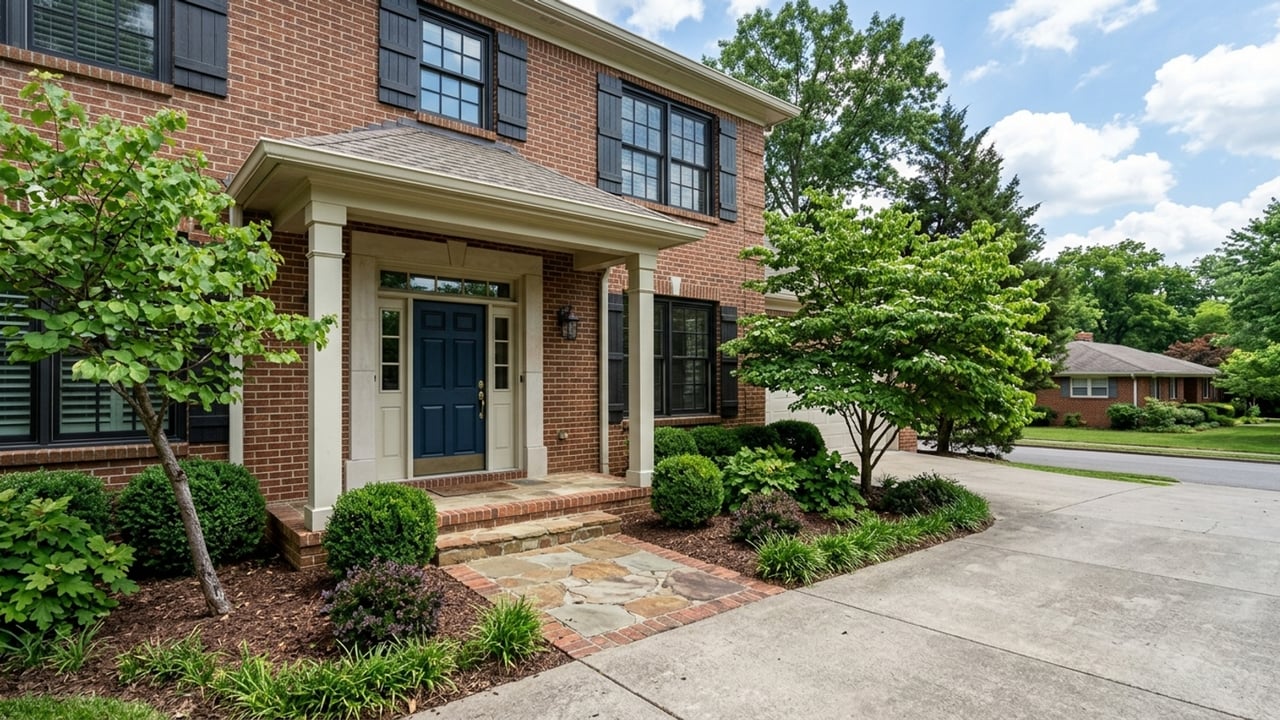
Seller closing costs in Franklin, TN: what you'll pay in 2026
Pricing November 12, 2026
Pricing November 12, 2026
Selling a home in Franklin, TN means planning for the fees, taxes, and credits that come out of your final sale price. The median sale price for all homes in Franklin is roughly $863,000, and a small percentage of that amount turns into a large dollar figure at the closing table.
Most of what a Franklin seller pays at closing is negotiated, not fixed: the commission and any buyer credit outweigh title and recording fees. Single-family sellers are in a firm market and can usually decline large credit requests. Condo sellers face roughly 12 months of supply and should budget for a concession and a longer carry, with townhouse sellers somewhere in between.
You're getting ready to sell a home in Franklin and want to estimate what comes out of your sale price at closing before you set a list price or sign a listing agreement.
Seller costs fall into three groups: fixed fees, negotiated costs, and time costs. Fixed fees include title, settlement, and recording charges. Negotiated costs cover the broker commission and any credits you agree to give the buyer. Time costs involve carrying the home and paying prorated property taxes or HOA dues until the sale closes.
The fixed group looks much the same on every Franklin settlement statement. The other two do not. How long your home sits, and how hard a buyer can push for a credit, depend on what kind of home you are selling.
The seller usually pays the listing-side commission, the cost of delivering clear title, and their share of prorations. The buyer typically pays their loan costs and the state recordation tax. The Tennessee Department of Revenue states the buyer is responsible for paying that tax to the county Register of Deeds.
No state law dictates the rest of the split. The purchase and sale agreement determines who pays what, and the standard Tennessee Realtors contract leaves blanks for the parties to negotiate who covers the title search and the title policies. Because those terms are open, a buyer can ask you to cover costs that are customarily theirs. How far you give depends on the bargaining power your property type holds right now.
Each charge below appears on the settlement statement that lists what is deducted from your proceeds. The amounts vary with your home's price, your mortgage balance, and the contract terms you agree to.
The commission you pay your listing agent is usually your largest closing fee, typically the largest single check written at the closing table. The rate is negotiable and is set in your listing agreement before the home goes on the market.
Under the nationwide NAR settlement rules that took effect in August 2024, buyer-agent compensation can no longer be advertised on the MLS. A buyer can still ask you, inside their offer, to pay their agent directly. The rate you negotiate with your listing agent is therefore only part of the commission picture.
Delivering a clear title requires a title search, deed preparation, and a settlement fee paid to the title company handling the closing. Ask the title company early for its seller-side settlement fee quote and a written seller net sheet. That gives you a baseline for your fixed costs before a buyer's offer tries to shift the owner's title policy onto you. The standard contract leaves that cost open, so read that line in every offer.
The transfer tax is $0.37 per $100 of the greater of the sale price or the property's value, and it is the buyer's to pay. Your own recording cost is usually limited to a small fee for recording the release of your existing mortgage at the Williamson County Register of Deeds. A buyer in a slower segment can still ask you to cover the recordation tax through a concession. Don't treat it as a guaranteed non-cost until the contract is signed.
Your mortgage payoff isn't a closing fee, but it comes out of your gross proceeds. Any home equity line of credit or other lien on the property must also be paid and released at closing.
Request a written payoff statement with the per-diem interest figure from every lender, including any HELOC. Close any HELOC account in writing so no further draws can be made. Your payoff will run higher than the balance on your last mortgage statement because interest keeps accruing daily until the loan is officially paid off.
Williamson County property taxes are billed annually in arrears, meaning each year's bill is due early the following year. A fall closing means you hand the buyer a credit for most of the year's taxes. Check whether your home is inside City of Franklin limits, since the city property tax rate adds to the proration. Pull last year's property tax bill from the Williamson County Trustee to estimate your share.
In a community with a homeowners association, you'll also owe prorated HOA dues up to the closing date. On top of that come the association's charges for a resale certificate and any transfer or capital contribution fee. Request those amounts from your HOA or management company now, before a buyer's lender asks for them. The proration itself is a fair split, not a fee you can avoid, but it lands as a large cash deduction at a late-year closing.
A concession is any financial credit you give the buyer to help them close the loan, fund repairs, or buy down their interest rate. In Franklin, how likely you are to pay one differs sharply by property type.
Single-family sellers hold the advantage right now. There's a median 3.5 months of supply, and 19.3% of single-family homes sold above list price in the 90 days ending September 30, 2026.
With low supply and frequent over-list sales, a large credit request is easier to decline or counter. The most common negotiated cost is a repair credit after inspection rather than an up-front closing-cost credit. Budget modestly for concessions and focus your negotiating effort on the listing agreement. At Franklin's price level, even a small percentage concession is a large check, so run the numbers before agreeing to one.
Townhouse supply looks close to the single-family market, but time on market behaves like condos: a median 82 days, and few townhouses sold above list price recently. Expect fewer bidding situations, and a modest credit request is more likely to come up than with a single-family home. Nearly three months on the market at the median means extra mortgage payments, HOA dues, and utilities before closing. That cost never shows up on the settlement statement.
Buyers hold the advantage in the condo market. Franklin condos sit a median 85 days on market, and the median condo sale price is down 6.5% year over year (based on 20 condo sales). With your building's recent sales as a better guide than the citywide figure, ask for them before you price.
Long market times and falling prices mean buyers can ask for a closing-cost credit, a price cut, or both. Price to the market from the start, and decide in advance how much credit you'd accept rather than reacting to the first offer. Financed buyers face lender caps that limit how large a credit they can use, which keeps requests from climbing too high. A condo seller can still give up ground on price and on a closing-cost credit in the same deal.
Net proceeds are your final sale price minus your mortgage payoff, fixed fees, and any concessions. Doing this math before you list helps you set a realistic target. Substitute your own loan balance and negotiated commission rate in the examples that follow.
The median sale price for a Franklin single-family home is $969,613, so each percentage point of price is about $9,700.
For illustration only: assume a 5.5% total commission split between your listing agent and the buyer's agent. That comes to roughly $53,328. Title fees, settlement charges, and the mortgage release recording fee might add another $1,500. If you close late in the year, your property tax proration credit to the buyer could add several thousand dollars more. Your mortgage payoff with per-diem interest is then deducted to reveal your net cash.
This example uses a citywide median. Your actual list price, payoff, and the buyer's requests will change the result.
The median sale price for a condo is $435,955, so each percentage point of price is about $4,360. Condos sell at a 97.2% sale-to-list ratio, so on a hypothetical $448,000 asking price, that 2.8% gap is a reduction of about $12,544.
For illustration only: if you agree to a 2% buyer credit to help them close, that costs you roughly $8,719. Add prorated HOA dues, the resale certificate fee, and your negotiated commission, and the price gap plus a credit can easily exceed every fixed fee combined.
You can't avoid property taxes or recording fees, but you can control the negotiated side. The best approach depends on your property type and how quickly you need to sell.
The listing agreement sets your largest controllable expense. Compare the listing rate, the services included, and how the agreement handles buyer-agent compensation if a buyer asks for it.
Single-family sellers gain the most here, because concessions are less likely to be their large cost. A lower fee can mean less marketing or fewer services, though, and that can cost more in price or days on market than the fee saves. Compare what's included, not just the rate.
Pricing in line with recent sales is the most effective way to avoid long carrying times and large credit requests. This matters most for condo and townhouse sellers, who face longer days on market.
A pre-listing inspection can surface repair items before a buyer uses them to negotiate a credit. Handling repairs on your own timeline is often cheaper than funding a buyer's requested credit at closing. The inspection and any repairs are paid up front, and once you know about a defect, you may need to disclose it to potential buyers.
A cash buyer removes lender-driven requests and appraisal risk, and may cover some of your closing costs. Cash offers often come in below market value, though. Compare the bottom-line net of a cash offer vs. an MLS listing rather than the fee list, because the fees you save can be smaller than the price discount you accept. Bill Diebenow at Compass can prepare a seller net sheet for your specific home to help you weigh these options.
Typical Tennessee seller closing costs range from 5% to 9% of the sale price when including the real estate commission. Exclude the commission, and fixed administrative and title fees usually run between 1% and 3%.
On a $300,000 home, typical seller closing costs range from $15,000 to $27,000 including commission. The buyer pays the state recordation tax, which would be $1,110 at that price.
Sellers still pay their own customary fees, such as title preparation and listing commissions. Whether they also cover the buyer's costs is negotiated: in Franklin, single-family sellers rarely do, but condo sellers often do.
A seller credit comes straight out of your net proceeds. If you raise the purchase price to fund that credit, the home must still appraise at the higher number.
The seller pays the most. The listing commission alone typically exceeds every fixed fee the buyer pays, and the seller also covers title and recording costs on their side.
Yes. It appears on the settlement statement as a charge to the seller and a credit to the buyer, reducing your net proceeds just like a fee. The buyer can apply it only to allowable closing costs and prepaid items, not to the down payment.
Selling expenses such as the commission and title fees generally reduce the amount realized on the sale rather than acting as itemized deductions. Your share of prorated property taxes may be deductible on your federal return. Tennessee has no state income tax on sale proceeds, but ask a tax professional how selling expenses affect your situation.
Yes. You can decline the request entirely, counter with a smaller credit, or offer a price adjustment instead. Weigh a refusal against how long comparable homes are sitting.
Tennessee real estate tips and insights.
Middle TN
Bill Diebenow | November 12, 2026
Pricing
Bill Diebenow | November 12, 2026
Home
Bill Diebenow | November 12, 2026
Home
Bill Diebenow | November 12, 2026
Home
Bill Diebenow | November 12, 2026
Search
Bill Diebenow | November 12, 2026
Bill's real estate experience spans residential and commercial transactions as an agent, buyer, seller, investor, tenant, landlord, and cross-county corporate relocation. Bill looks forward to understanding your needs, building your trust, and helping you successfully sell your existing home, find your new home, or add to your real estate portfolio.

Bill Diebenow
3990 Hillsboro Pike Suite 320 Nashville TN 37215