HOA fees in Franklin, TN: what they cover and where you can negotiate
Home November 12, 2026
Home November 12, 2026
Franklin has no single flat rate for homeowners association dues. Each neighborhood or condo board sets its own budget based on its specific amenities, shared maintenance needs, and reserve targets.
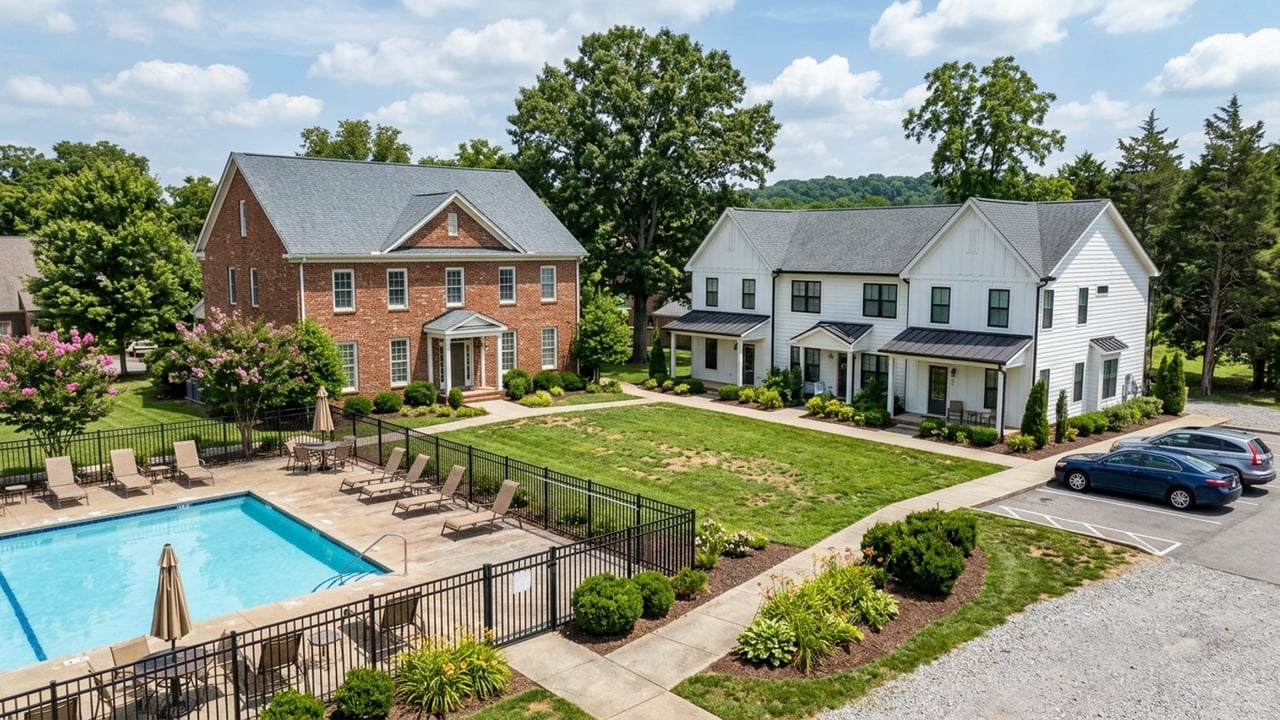
Franklin HOA fees are set complex by complex, so judge a fee by what it covers. Parkside at Aspen Grove's listed fee includes water, sewer, and trash, which other complexes' listings do not always match. If you want room to negotiate a fee-heavy home, start with condos, the only Franklin home type whose median price fell recently. Townhouses are the alternative if you would rather buy where prices are still rising and listings sit long enough to compare HOAs carefully.
You are comparing Franklin condos, townhomes, or neighborhood associations and need to work out whether a monthly fee is worth it and whether it gives you room to negotiate the price.
Of six complexes with recent MLS listings, only one shows a current active fee amount (Parkside at Aspen Grove, profiled below). The reliable move is to compare coverage and confirm the exact dollar amount with the HOA directly. Single-family neighborhood associations like Rogersshire and Oakwood Estates publish their dues on their own sites.
Association dues are billed separately from your property taxes, so count both when you work out your overall cost of living and monthly housing expenses.
The median condo sale price dropped 6.5% year over year to roughly $435,955 over a recent 90-day period (based on 20 condo sales, so treat it as a rough signal rather than a lasting trend).
With about 12 months of supply and listings sitting for a median of 85 days, condo buyers have room to negotiate. You can ask the seller to offset a high monthly fee by lowering the purchase price or offering closing cost credits. Condos and single-family houses sell for nearly the same price per square foot, about $323 versus $332. The condo discount comes from the smaller size, with the fee stacked on top.
Townhouses present a different picture. Listings still take a median of 82 days to sell, which gives you time to read the association documents and compare associations. But prices are up 10.1% to a median of $615,007, so you're less likely to get a discount to offset the dues.
Single-family homes move the fastest, at a median of 50 days on the market, with nearly one in five selling above the asking price. Neighborhood association dues on these houses rarely change the purchase price, so you simply need to budget for them. Buyers evaluating these timelines can reference our Franklin housing market breakdown.
Coverage, taken here from MLS listings, differs far more than the fee amounts suggest. Some associations bundle major utilities and insurance, while others pay only for landscaping and a community gate. When you compare complexes, you're comparing which of your usual bills the association handles for you.
At about $495 a month per an August 2026 listing, this complex shows the widest coverage of any property on this list. The dues pay for structure and grounds maintenance, recreation facilities, pest control, sewer, trash, and water.
One caveat: this is just one listing's fee, and associations can raise dues. Ask the board for the current amount and the last two years of increases before you write an offer.
This is the only complex here whose listing includes internet in the dues. The listed coverage also handles structure and grounds maintenance, along with recreation facilities.
What you give up is certainty on the current cost, as the fee on file is more than 12 months old. Ask the association for the current dues and who the bundled internet provider is, since you can't easily switch services.
A recent listing for Brentwood Pointe 3 shows dues covering structure and grounds maintenance, insurance, recreation facilities, and sewer. Sewer is covered but water is not listed, and the fee on file is over a year old.
A master insurance policy usually covers the building and common areas, not your interior or belongings. Ask what this one covers and what interior policy the association expects owners to carry.
A September 2025 sold listing for this townhome community shows coverage for exterior maintenance, grounds maintenance, and insurance for common areas.
That listing is over a year old, and no current fee is confirmed. Ask the board whether exterior maintenance includes full roof replacement or only routine upkeep.
Located at 1129 W Main St, this complex was formerly known as Williamsburg Commons, so older records and reviews may use that name. An active listing shows the fee covers structure and grounds maintenance only.
No utilities or amenities are listed in the fee, and the amount on file is over a year old. Budget for water, trash, and internet separately, and confirm the current dues.
An active listing here shows a fee focused on shared spaces. The dues pay to maintain the community fountain and gated entry, along with grounds maintenance, courtyard upkeep, landscaping, common-area lighting, and trash removal.
Structure maintenance is not listed, and no fee amount is confirmed. Ask whether roofs and exteriors are the owner's responsibility and whether the reserve fund covers gate and fountain repairs.
Parkside at Aspen Grove's fee works out to $5,940 a year, or $29,700 over five years. That five-year total equals about 6.8% of the median condo sale price. To see the true cost, subtract what the fee replaces, like water, sewer, and trash, using your own estimates for local utilities.
Red flags often hide in the association's finances rather than the monthly price tag. Check for:
These one-time and irregular charges vary widely by association. Request the exact figures from the management company early in your purchase.
When you buy an association-managed home, the management company charges a fee to transfer the property records. Tennessee law lets an association charge a reasonable fee for providing unit resale and disclosure information, but it does not set a specific dollar cap. Resale certificate fees typically run $150 to $400 depending on the association.
The exact amount is almost never in the listing, so ask for it early so it doesn't surprise you at closing.
Some associations charge buyers a one-time contribution to reserves or working capital at closing. This is often a set dollar amount or a multiple of the monthly dues, as outlined in the governing documents. Ask for the amount in writing before you set your final cash-to-close budget.
A special assessment is an extra charge levied when the reserve fund can't cover a major repair, such as a new roof or paving. Under the Tennessee Condominium Act, a condominium association must follow its budget adoption procedures for a special assessment, and the assessment requires a two-thirds vote of the board.
If you're buying a condo, an approved but unpaid assessment can often be negotiated with the seller before closing. An assessment approved after you close becomes your responsibility. To see whether major repairs are pending, ask for recent board minutes and the latest reserve study, not just the current budget.
Match the pick to your need:
A stack of association bylaws and reserve studies can feel overwhelming. You can request and review these documents during your purchase so you know exactly what you're buying into.
It depends on the association. Condo listings like Parkside at Aspen Grove show a monthly fee, while some single-family associations bill quarterly or annually, so confirm the schedule with the association.
The current Tennessee Realtors standard Purchase and Sale Agreement (RF401) makes the buyer responsible by default for association transfer fees, related administration fees (not including statement of accounts), and capital contributions incurred due to the sale. Confirm the line item on your contract and settlement statement.
Yes. Per Fannie Mae's Selling Guide, the monthly housing expense used in your debt-to-income ratio includes owners' association dues, so higher dues reduce the loan amount you qualify for. Confirm your purchasing power with your lender.
Only if the complex is FHA-approved or the unit qualifies for single-unit approval. That approval requires a project that is not already FHA-approved and has at least five units, along with meeting owner-occupancy and financial conditions. Look up the complex on HUD's approved list before writing an offer.
Yes, on two levels. The association's declaration may cap or ban leasing. Separately, a 2019 city ordinance amendment limits new short-term rentals in residential areas to owner-occupied properties, one per lot.
Tennessee Code Section 66-27-415 gives a condominium association a lien on the unit for assessments and fines from the time they become due, and the association may judicially foreclose that lien. Non-condo associations rely on their recorded covenants, which you can look up through the Williamson County Register of Deeds.
Tennessee real estate tips and insights.
Middle TN
Bill Diebenow | November 12, 2026
Pricing
Bill Diebenow | November 12, 2026
Home
Bill Diebenow | November 12, 2026
Home
Bill Diebenow | November 12, 2026
Home
Bill Diebenow | November 12, 2026
Search
Bill Diebenow | November 12, 2026
Bill's real estate experience spans residential and commercial transactions as an agent, buyer, seller, investor, tenant, landlord, and cross-county corporate relocation. Bill looks forward to understanding your needs, building your trust, and helping you successfully sell your existing home, find your new home, or add to your real estate portfolio.
Bill Diebenow
3990 Hillsboro Pike Suite 320 Nashville TN 37215