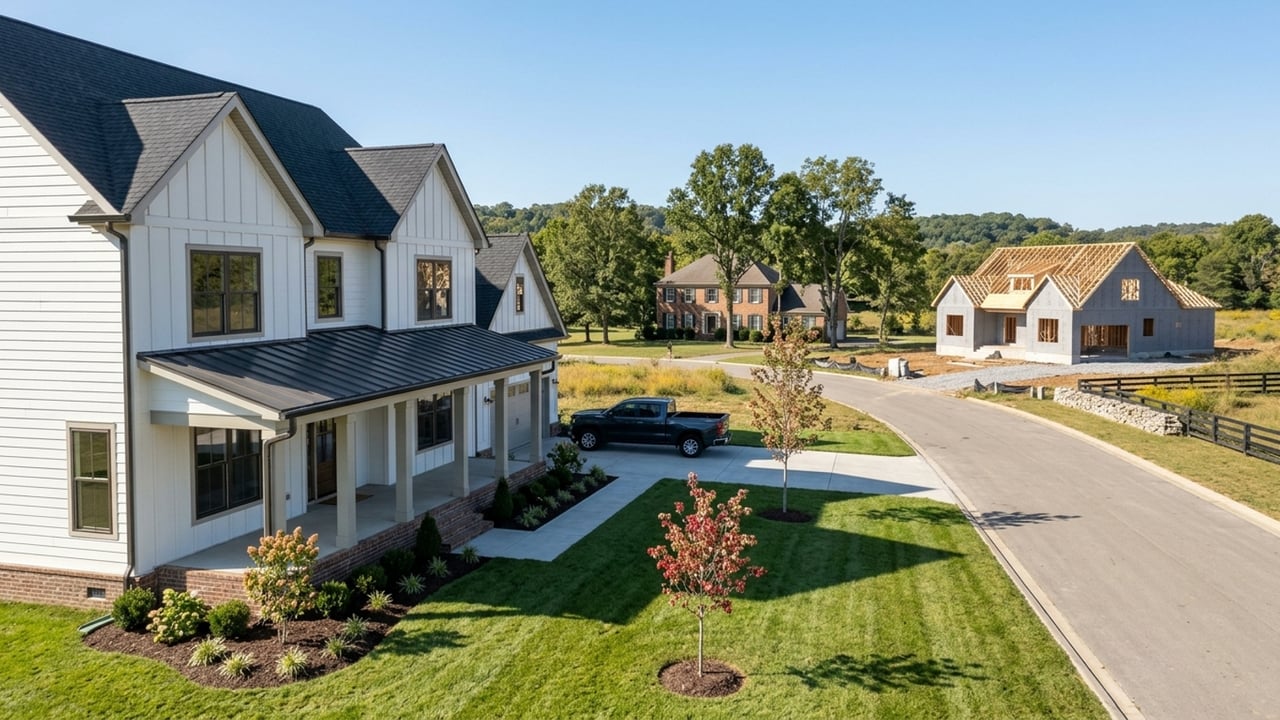
What to expect when building your own home in Franklin, TN (2026)
Home November 12, 2026
Home November 12, 2026
Single-family homes in Franklin, TN, sold for a median of $969,613 in the 90 days ending September 30, 2026. At that price, it's a fair question: does building from scratch save money, or does it get you a better house for the same money?
The honest answer is that it depends entirely on your land situation. Building involves land acquisition, site preparation, permitting, and construction. Comparing a builder's construction bid against a finished home's sale price is an incomplete equation, because that finished price already includes the land.
Build in Franklin when you already own the land, or can lock in a lot and a builder bid that together come in under what finished single-family homes sell for. Owning the lot removes the largest piece of that number, which is why building on land you hold is the strongest case. If your all-in quote lands above the benchmark, a finished home or a builder-community house gets you in sooner for less, unless the custom features are worth that premium to you.
You are weighing whether to build a home in Franklin, on land you own or a lot you would buy, instead of buying a finished house, and need to know what the build has to cost to make sense.
Building only saves money when the lot, site work, fees, and construction together come in under what finished single-family homes are selling for. In the 90 days ending September 30, 2026, 342 single-family sales closed at a median price per square foot that is the ceiling your project has to beat.
The case for building rests on getting a home those recent sales couldn't offer you. And owning the land already is what most often makes the math work.
The median price per square foot of recently sold single-family homes is the ceiling your project has to beat. It bundles the lot, site work, construction, finishes, and the builder's margin into one number that buyers are already paying. Any build quote has to be compared against it all-in, not just the construction line item.
The limitation is that the median blends homes of every age and size. A brand-new home with current systems can be worth paying above it, so ask an agent to pull recent new-construction sales near your lot for a like-for-like comparison.
The bills arrive in a specific order. It starts with the lot, survey, and soil work, then moves to site prep, the driveway, and either utility taps or well and septic installation. Permits and impact fees follow before construction ever begins.
The City of Franklin charges a Facilities Tax of $0.89 per gross square foot for single-family detached construction, plus a Parkland Impact Fee of $4,304 per dwelling unit. Building permit fees for new detached single-family dwellings add another $0.89 per gross square foot, plus a $10 per-permit technology fee. Tennessee falls in the East South Central division, the most affordable region for new construction in the country according to the NAHB's 2024 Survey of Construction.
What you give up is certainty. Carry costs and overruns are where budgets break: interest on a construction loan accrues while you may still be paying rent or a mortgage elsewhere, and allowance-based bids climb with every finish upgrade. Before signing anything, ask any builder whether the bid is fixed-price or cost-plus, and exactly what the allowances cover.
On a 3,000-square-foot home, a finished Franklin house is roughly a $996,000 purchase at the current median. That's the number your lot plus build has to beat. Using a placeholder of $250,000 for the lot and site work (for illustration only), that leaves $746,000 for the rest of the project, which equals about $249 per square foot as the absolute most a builder can charge for construction before building costs more than buying. Swap in your own lot price and target square footage to find your specific ceiling.
If bids come in above that number, you're paying a customization premium. That's a fine choice when it's deliberate, but it's not a saving. The example also ignores the months you'll wait, which matters when prices are moving.
Single-family home prices in Franklin rose 14.8% year over year during the 90 days ending September 30, 2026. Homes sold in a median of 50 days, with 19.3% selling above the list price. The market holds 3.5 months of single-family supply, so finished houses are genuinely contested.
Building avoids bidding wars, but every month of permitting and construction is a month of price movement on both your build costs and the homes you're comparing against. If timeline matters, finished options like townhomes offer another route. Check the local housing market trends and home types to see what's currently available.
The status of the land changes how the benchmark math works. The lot is usually the largest single expense baked into a finished home's price, and whether you already hold the deed or are shopping for dirt, the physical and legal constraints of the parcel dictate what you can build there.
Building on land you already own is the strongest case for a custom build. The lot is the piece of the finished-home price you've already paid, so more of the per-square-foot benchmark is available for construction. You still need to confirm zoning, setbacks, and whether the property uses city utilities or well and septic.
Williamson County's Sewage Disposal Management Department requires soil mapping performed by a Soil Scientist in coordination with a licensed Surveyor as the first step in new septic system permitting. The completed map must be submitted for review and approval before you can proceed to a system determination or site-specific evaluation. Compare water sources and utility costs to understand the site work required.
Owned land is not automatically buildable land. A failed soil test for septic, a floodplain designation, or a costly utility extension can erase the lot advantage. Get the soil evaluation and a survey before paying for plans.
When you buy a lot, the price goes straight into the benchmark math and decides everything else. Every dollar spent on the land comes out of what you can spend on the house. Run any lot you're considering through the worked example to see whether the remaining budget supports your target square footage.
Zoning and Franklin's land-use plan affect what you can build, and infill lots in the historic core face design review. Within Franklin's Historic Preservation Overlay District, new construction requires full Historic Zoning Commission approval through a public hearing, resulting in a Certificate of Appropriateness based on the Franklin Historic District Design Guidelines. You'll also want to compare lot sizes against nearby Brentwood and verify school assignments for the specific parcel.
A lot priced near what finished homes command per square foot leaves little room under the benchmark. Price two or three actual lots to see what remains for construction.
Buying a lot from a builder inside a planned community offers a middle path. A builder's lot-and-house package can be compared directly against the benchmark, with site work and utilities already in the price. Timelines are more predictable, and you can pick from the builder's available plans. Review a neighborhood shortlist to see which areas fit your budget.
The trade-off is customization for convenience. Plan sets, exterior materials, and lot choice are limited, HOA design rules apply, and you may be required to use the community's builder. Ask the HOA for current dues and architectural guidelines before buying a lot in a planned community.
The State of Tennessee regulates who can pull permits and oversee residential construction. A licensed general contractor manages the project from site prep to the final punch list; you can also act as your own general contractor, but that choice changes both the financial structure and the legal responsibilities of the build.
The Tennessee Board for Licensing Contractors requires a contractor's license for any contracting project totaling $25,000 or more. A Residential license allows erecting, remodeling, or repairing residential structures, while a Limited Residential license restricts work to projects of $125,000 or less. You can verify a builder's license with the state board before signing a contract.
A builder experienced with the City of Franklin or Williamson County permit process saves time. When comparing bids, ask whether the contract is fixed-price or cost-plus, and how change orders are priced. The builder's margin is built into the bid, and that margin is part of why your all-in cost may land near or above the benchmark. Ask for warranty terms in writing.
Under Tennessee law, any person who owns property and constructs a single residence for individual use, and not for resale, lease, or rent, is exempt from the state contractor licensing requirement. This owner-builder exemption lets you schedule the subcontractors, order materials, and manage inspections yourself to save the builder's margin.
The statute creates a rebuttable presumption of intent to resell or rent if more than one single residence is constructed within a two-year period, which voids the exemption.
Financing is the wall most owner-builders hit. Many construction lenders require a licensed builder of record, and mistakes in sequencing or inspections cost both time and money. Ask construction lenders whether they finance owner-builders and what down payment they require before you buy land.
A custom build moves through a specific sequence of financial and municipal approvals. Skipping a step or assuming an outcome usually means delays and higher costs. The process starts with the math and ends with a certificate of occupancy.
Target a size, multiply it by the benchmark, and subtract the land and site work to find your construction ceiling. Refer back to the worked example to see how the math plays out, then add a contingency line for unexpected expenses.
Budgets set before the lot is chosen are guesses. Site work on a sloped or rural lot can move the number, so revisit the budget once you have a survey in hand.
Construction-to-permanent loans combine interim construction financing and permanent financing into one closing. Per Fannie Mae guidelines, the loan cannot be purchased until construction is completed and the loan has converted to permanent terms. The construction loan period may be no more than 12 months.
Borrowers must follow standard verification-of-deposit and asset documentation guidelines to determine eligible funds for the down payment, closing costs, and reserves.
Construction loans often require a larger down payment than a standard purchase, and the appraisal is based on plans that don't exist yet. A low as-completed appraisal can force you to cover the gap in cash.
Due diligence happens before closing on land. Confirm zoning, setbacks, floodplain status, and whether the lot has sewer and water availability or requires a septic soil evaluation.
Check the school assignment for the specific address with Williamson County Schools or Franklin Special School District, and don't rely on listing descriptions. Buying land first and checking later is the most expensive order to do this in. Make the land contract contingent on soil, survey, and utility findings.
The issuing office depends on whether the lot is inside city limits or in unincorporated Williamson County. The City of Franklin requires all residential construction plans to be submitted through the electronic plan review system. Required submittals include a completed Residential Building Application, a scaled plot plan showing setbacks and easements, and two sets of house plans.
Effective January 1, 2026, the City of Franklin adopted the 2024 International Residential Code along with the 2009 International Energy Conservation Code for buildings reviewed under the IRC. A homeowner may pull the building permit themselves once every two years, but if a contractor performs the work, the contractor must be licensed and pull the permit.
Plan review and impact fees arrive before construction starts. Incomplete drawings send applications back, so confirm with your builder or designer who handles submittals and resubmittals.
The construction sequence requires footing, framing, mechanical, and final inspections, alongside the lender's draw inspections. Once the work passes final inspection, the local authority issues a certificate of occupancy. The finished home's assessed value drives your property taxes, so factor that into your long-term budget.
What you give up is a firm timeline. Weather, material delays, and failed inspections all stretch things out, and each extra month adds loan interest. Ask your builder how delays are handled in the contract and whether the bid includes a completion date.
Pull recent new-construction sales near a lot you're considering to get a precise comparison. Always confirm actual costs with builders, lenders, and the permitting office before signing a contract.
A 2,000-square-foot build must come in under $664,000, lot included, to cost less than buying a finished home at the current single-family median. The NAHB's 2024 Survey of Construction puts the national median construction cost for a custom home at $166 per square foot. Get two or three bids for the plan to find your exact construction cost.
At that median, $500,000 buys roughly 1,500 square feet of finished home including the land. The lot price decides how much of the $500,000 is left for construction. Price two or three actual lots to see if the remaining budget covers your target square footage.
Franklin is in Williamson County, not Davidson. Lots inside city limits go through the City of Franklin's electronic plan review system; for unincorporated areas with a Franklin address, you must check the Williamson County requirements.
Based on 2024 U.S. Census Bureau Survey of Construction data, the South region averaged 8.1 months from authorization to completion. Lot search, design, and permitting all happen before that construction phase begins. Ask builders for a contractual completion date.
No, the City of Franklin does not require a safe room. Effective January 1, 2026, the city adopted the 2024 International Residential Code along with local amendments. You can still choose to add one using FEMA P-320 residential safe room guidance as an optional design standard.
It depends on your exact water source. Check the City of Franklin water quality report hardness figures if you're on city water, noting that parts of the area use other utility districts or wells. Confirm the provider for the lot and test well water to decide if a softener is necessary.
Tennessee real estate tips and insights.
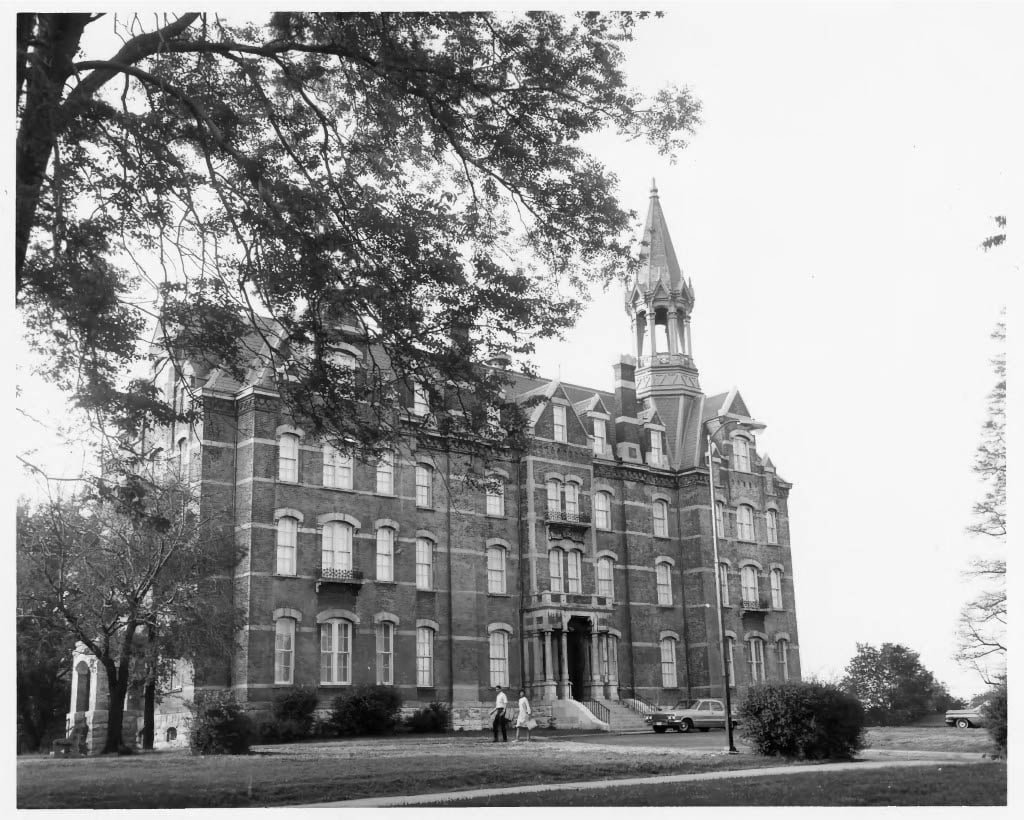
Middle TN
Bill Diebenow | November 12, 2026
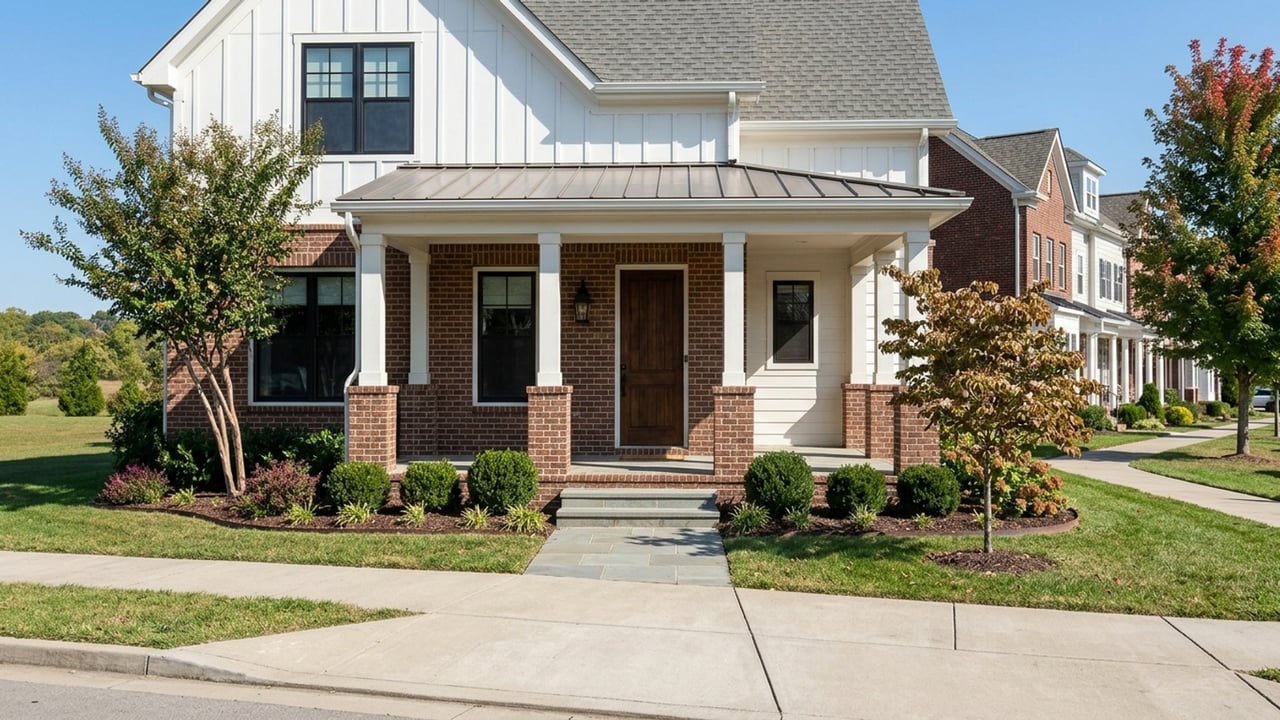
Pricing
Bill Diebenow | November 12, 2026
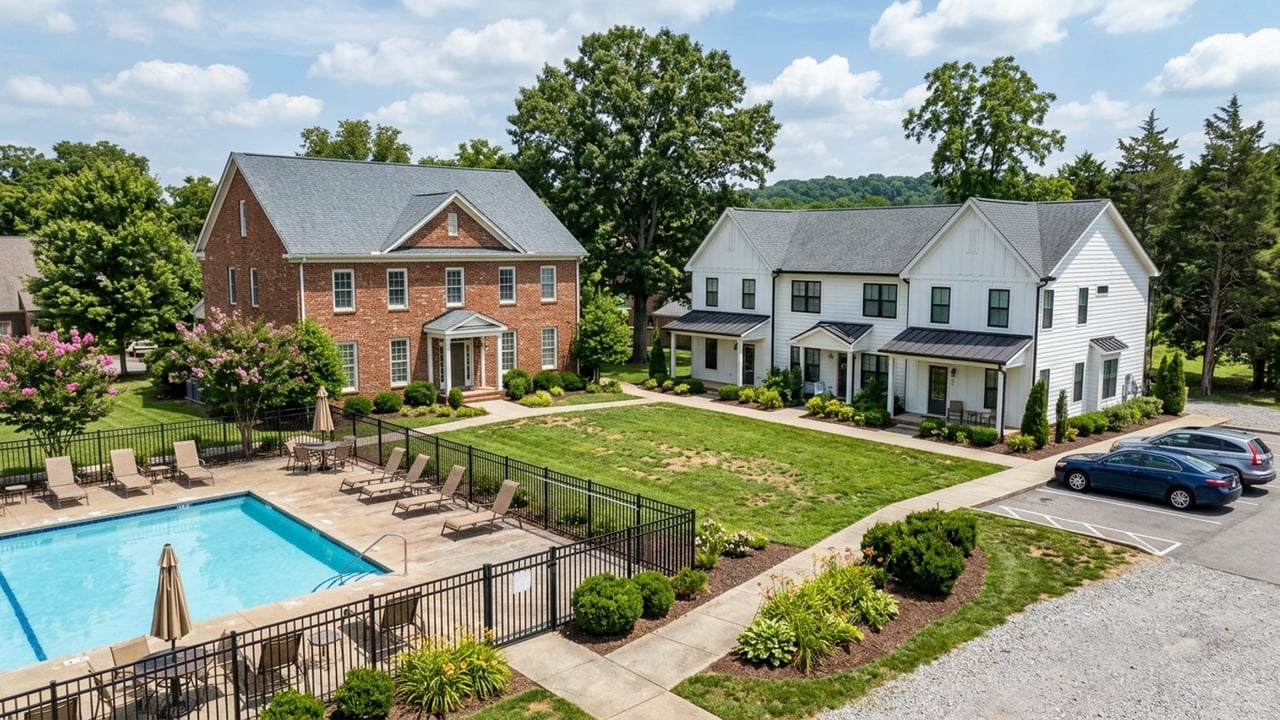
Home
Bill Diebenow | November 12, 2026
Home
Bill Diebenow | November 12, 2026
Home
Bill Diebenow | November 12, 2026
Search
Bill Diebenow | November 12, 2026
Bill's real estate experience spans residential and commercial transactions as an agent, buyer, seller, investor, tenant, landlord, and cross-county corporate relocation. Bill looks forward to understanding your needs, building your trust, and helping you successfully sell your existing home, find your new home, or add to your real estate portfolio.
Bill Diebenow
3990 Hillsboro Pike Suite 320 Nashville TN 37215