Utilities in Franklin, TN: Comparing City Water and Well Water
Real Estate October 6, 2026
Real Estate October 6, 2026
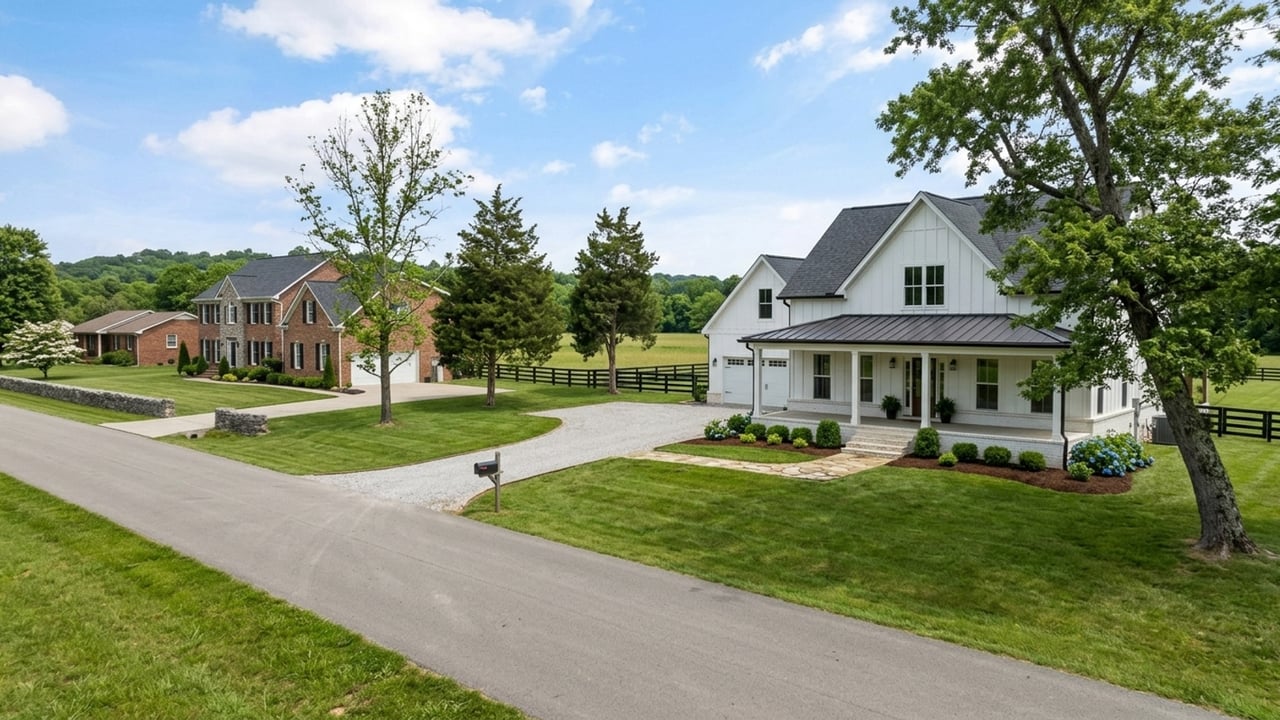
The median home price in Franklin, TN recently hit roughly $863,000, with about 566 homes in active inventory. Buyers evaluating the pros and cons of living in Franklin encounter a real mix - rural estates on multi-acre lots sitting a few miles from dense suburban neighborhoods with HOA amenities.
That variety extends underground. Properties in Franklin rely on different water infrastructure depending on where they sit, and understanding which system a home uses is one of the more consequential parts of evaluating a purchase. It affects your monthly bills, your maintenance responsibilities, and your due diligence checklist.
Most residents in Williamson County get their water from public systems. Private wells serve a smaller share - roughly 3,701 households, or about 9,253 people, by area estimates.
Step outside the immediate downtown area, though, and well-dependent properties become more common. Which system a house uses shapes everything from your monthly budget to what you're inspecting before you close.
A municipal water system treats and pumps water to your home through a network of underground pipes. The city or local utility district handles maintenance, testing, and infrastructure repairs - none of that falls on you.
A private well draws groundwater from aquifers beneath your specific property. The pump, the casing, and any filtration equipment belong to you. So does every repair bill.
The City of Franklin charges a monthly base rate of $22.68 for residential water service, plus a volumetric rate of approximately $4.46 per 1,000 gallons used. For a household using 5,000 gallons a month, that works out to about $45.00 on the water portion of the bill alone.
Stacking in sewer, electric, and trash, total monthly utility costs for a Franklin home average around $262.69.
Not every home on public water gets a bill directly from the city. Franklin's own documentation notes four distinct water districts serving the area - H.B. & T.S., Milcrofton, Mallory Valley, and Lynnwood Utility District. In neighborhoods like Legends Ridge, for example, Lynnwood provides the water while the city handles sewer billing. The city also provides wastewater, trash, and stormwater services for about 10,500 customers who purchase water from these outside districts.
Worth knowing before you assume your address means a single utility bill.
Well water doesn't carry a monthly volumetric charge. You pay for the electricity to run the pump, which folds into your regular power bill and is easy to underestimate.
The real costs show up less predictably - pump repairs, pressure tank replacements, routine water testing. Those expenses don't arrive on a schedule, and they're entirely your problem when they do.
The Tennessee Department of Environment and Conservation (TDEC) is direct about this: groundwater quality varies widely across the state. Common issues in Tennessee include iron, sulfur odor, hardness, sediment, and bacteria.
Municipal systems filter and treat water before it reaches your tap. With a private well, that responsibility sits with the homeowner. You get the water your aquifer produces, treated only to the extent that you've invested in equipment to treat it.
Public water providers must meet federal and state drinking water standards. Third-party aggregators compile data from the EPA and TDEC to track local water department compliance, and customers receive annual reports showing the exact mineral and contaminant levels found during routine testing.
You don't have to think much about it. That's either a selling point or not, depending on how you view things.
The Tennessee Department of Health encourages well owners to test initially for bacteria, heavy metals, and nitrates. The Williamson County Department of Sewage Disposal Management coordinates sample collection for a $100 fee - sometimes waived for flood-affected wells, though state lab analysis fees remain separate.
Depending on what the results show, you may need to add water softeners, reverse osmosis systems, or UV filters. That's not a scare tactic - it's just the reality of owning the system.
A well gives you complete independence from municipal utility rate hikes. You're drawing directly from the aquifer beneath your land without paying a per-gallon charge to anyone.
The flip side is that you've become your own water department. Pump failure on a holiday weekend? You're finding an emergency contractor and writing the check.
Power outages cut your water supply immediately - the pump requires electricity to function, and without a backup generator, a serious storm can leave you without running water for as long as the outage lasts.
Groundwater can also shift over time for reasons that have nothing to do with your equipment. A well that produced clean, clear water for years can develop a sulfur smell or elevated iron content, and the fix is new filtration gear that you pay for out of pocket.
Properties with wells tend to sit on larger lots in quieter, less dense parts of Williamson County. There's no monthly volumetric bill, which frees up cash flow for other expenses. Some homeowners also genuinely prefer the taste - without the chlorine that municipal systems use, the flavor profile is different, and for a lot of people that's a point in the well's favor.
Getting a property onto public water requires municipal infrastructure nearby. If a utility line already runs past your property, the process means paying connection fees and hiring a plumber to run lines from the street to the house.
The City of Franklin charges a $25 connection fee for access to the water system on new construction installations. That number is straightforward. What isn't straightforward is the private contractor cost for trenching and running the physical pipe - that's where the real expense lives.
Start by contacting the specific utility district that governs your address. They'll confirm whether a line runs near the property and outline the required permits and exact tap fees.
From there, a licensed contractor excavates the yard, lays the new water line, and disconnects the home's internal plumbing from the well system before tying it into the municipal feed.
Some properties carry both a private well and a municipal connection. The municipal line handles indoor drinking and bathing water - consistent pressure, treated supply. The well gets repurposed for outdoor irrigation or pool fill, which keeps the monthly municipal water bill lower during summer.
It's a reasonable setup if the infrastructure is already in place. Not every property can support it, but it's worth asking about when you see both systems listed in a disclosure.
Homes in Franklin, TN currently spend an average of roughly 49 days on the market. That's not a long window for due diligence, and a standard home inspection won't cover what you need to know about a well.
Inspectors look at the house. Well systems require specialists.
A dedicated well inspection evaluates the pump's flow rate, the pressure tank's condition, and the casing's integrity - confirming the system can deliver enough water for daily household use. That's separate from a water quality test, which you should also order through the county health department or a private lab to check for bacteria and heavy metals.
Two inspections, two separate costs, both worth it.
Ask for all maintenance records on the pump and filtration system. Find out the age of the equipment and when the water was last tested. Ask directly whether the well has ever run dry during a drought.
The answers won't always be complete, but what sellers volunteer - and what they hesitate on - tells you something.
It depends on your priorities and where the property sits. City water offers convenience, consistent testing, and no maintenance responsibilities. A well provides independence from monthly volumetric bills but puts all system responsibility on you.
City water runs a predictable monthly cost - about $45 for 5,000 gallons in Franklin. Well water carries no monthly volume charge but requires you to cover pump electricity and all equipment maintenance, which is less predictable.
Both can be safe. Municipal water is treated and tested regularly to meet state standards. Well water safety depends on the homeowner conducting routine testing and maintaining proper filtration.
You're solely responsible for all repairs, and the pump requires electricity to run. If the power goes out, you lose running water unless you have a backup generator.
The City of Franklin charges a $25 connection fee for new access to the system. Total costs run considerably higher once you factor in private contractor fees for trenching and running the physical pipe to your house.
Yes. Some homeowners use the municipal connection for indoor drinking water and keep the private well for outdoor irrigation.
The state encourages initial testing for bacteria, heavy metals, and nitrates. Before closing, you should hire a specialist to inspect the pump, flow rate, and pressure tank, and separately order a water quality test through the county health department or a private lab.
Both communities sit within Williamson County, but buyers often find different mixes of rural estates and dense suburban neighborhoods. Reviewing a comparison of Franklin and Brentwood helps clarify which area offers the right property style and utility infrastructure for your needs.
Tennessee real estate tips and insights.
Real Estate
Bill Diebenow | October 6, 2026
Real Estate
Bill Diebenow | October 6, 2026
Real Estate
Bill Diebenow | October 6, 2026
Real Estate
Bill Diebenow | October 6, 2026
Bill Diebenow | October 6, 2026
Real Estate
Bill Diebenow | October 6, 2026
Bill's real estate experience spans residential and commercial transactions as an agent, buyer, seller, investor, tenant, landlord, and cross-county corporate relocation. Bill looks forward to understanding your needs, building your trust, and helping you successfully sell your existing home, find your new home, or add to your real estate portfolio.

Bill Diebenow
3990 Hillsboro Pike Suite 320 Nashville TN 37215