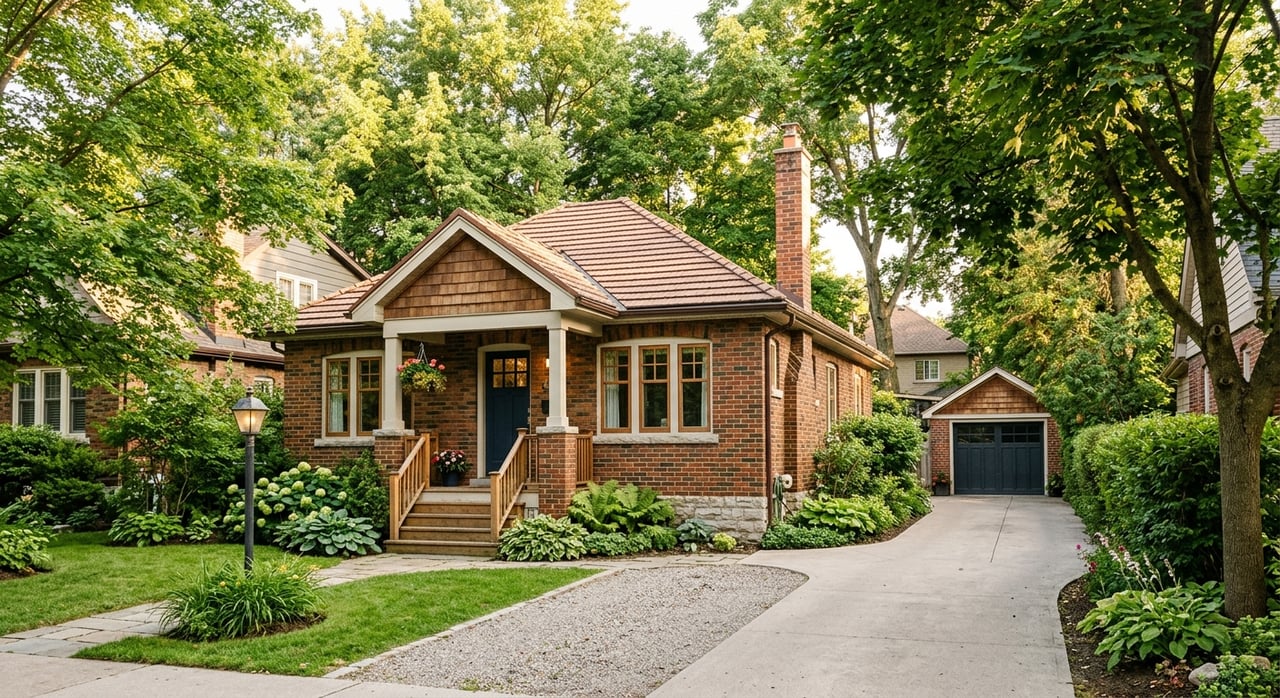
Buying Your First Home In Belmont-Hillsboro
July 2, 2026
July 2, 2026
Buying your first home in Belmont-Hillsboro can feel exciting and a little intimidating at the same time. You may love the character, walkable feel, and older homes, but you also want to avoid costly surprises and make a smart first purchase. This guide will help you understand what makes Belmont-Hillsboro unique, what to watch for as a first-time buyer, and how to plan your budget and next steps with confidence. Let’s dive in.
Belmont-Hillsboro is one of Nashville’s historic neighborhoods, with roots that go back to subdivisions created in 1890 and 1891. A street railway franchise in 1901 helped shape the area as a streetcar suburb, and development continued until about 1940. That history still shows up today in the homes, lot layouts, and overall streetscape.
You will see a mix of bungalows, cottages, American foursquares, and Tudor homes, along with some prairie, eclectic revival, and later contemporary examples. The neighborhood was listed as a National Register Historic District in 1980. For a first-time buyer, that usually means more charm, more personality, and more variation from one property to the next.
Another important point is condition. City design guidelines note that the area went through a period of decline after World War II, including deferred maintenance and conversion of some single-family homes into rental units, followed by years of renovation and restoration. In practical terms, two homes on the same block can look similar but have very different maintenance needs.
If you are buying in Belmont-Hillsboro, it helps to shift your expectations a bit from what you might expect in a newer subdivision. You are often not buying a perfectly uniform product with wide driveways, large garages, and simple renovation rules. You are buying into a neighborhood where character and constraints often come together.
That is not a bad thing. It just means you need to look closely at the home itself, the lot, and your future plans before you make an offer. If you hope to update the kitchen, add parking, build an outbuilding, or make exterior changes later, those details matter early.
Older homes in Belmont-Hillsboro often reward buyers who budget for ongoing upkeep instead of assuming every house is fully turn-key. Even a well-kept home may come with older materials, aging systems, or exterior features that need attention over time. That is normal in a neighborhood with this kind of housing stock.
The local district guidelines suggest paying extra attention to roofs, porches, siding, masonry, and visible mechanical equipment. These are not just cosmetic details. They can affect both your near-term budget and your future renovation options.
Historic wood windows are another good example. The district guidelines note that they can be as efficient as newer replacements when they are in good repair and properly maintained. So if a home has original windows, do not assume replacement is automatically the best answer.
Fresh paint and staged rooms can make a strong first impression, but first-time buyers should look deeper. In Belmont-Hillsboro, materials and exterior details often matter more than they would in a newer home. A property that looks great online may still need repair work to preserve or match historic features.
If you are thinking about future improvements, the district documents say vinyl and aluminum siding are not appropriate for new construction in the overlay. Common and approvable materials include wood, brick, weatherboard, board-and-batten, and smooth cement-fiberboard. That can affect both your renovation budget and the type of work that makes sense after closing.
One of the most important things to understand before buying is the local Neighborhood Conservation Zoning Overlay. According to Nashville’s historic-zoning handbook, this is the least restrictive overlay type. It does not change property rights or use, but it does add a design-review process for certain changes.
That distinction matters. The National Register listing is honorary and does not change property rights. The local overlay is what can trigger design review.
In Belmont-Hillsboro, review generally applies to new construction, additions, demolition, relocation, and setback determinations. If a project needs review, you must get a Preservation Permit before a building permit is issued. Work completed without the required permit, or not according to the permit, is considered a violation.
Not every project will go through review. The district guidelines say work that is not visible from the public right-of-way, excluding alleys, is generally not reviewed. They also note that painting wood is not reviewed in Belmont-Hillsboro.
That said, first-time buyers should be careful about making assumptions. If your plans involve exterior changes, additions, or changes that affect the visible character of the property, it is smart to verify the permit path early. This can help you avoid delays and budget surprises after you move in.
If you hope to buy and then renovate quickly, timeline planning is important. Nashville’s handbook says some routine projects can receive an administrative permit in about four business days or less after a complete application. Other projects that require a hearing are generally heard on the third Wednesday of the month, with application deadlines generally 16 days beforehand.
That means your post-closing plan may move faster for some projects than others. It also means buyers should not assume every improvement can start right away. Depending on the scope of work, the commission may ask for site plans, elevation drawings, and material details.
Many first-time buyers focus on square footage and finishes first, but in Belmont-Hillsboro, the lot can be just as important as the house. The neighborhood developed before modern setback rules, and the city guidelines note that existing conditions sometimes require some leeway. Lot shape, alley access, neighboring structures, and property lines all matter.
Parking is often tighter here than in newer suburban neighborhoods. The guidelines generally discourage adding curb cuts, and when a new driveway is appropriate, it should usually be two concrete strips with a grassy median. Front-yard parking or driveways that stop at the front of the house are not consistent with the district character.
Where alleys exist, access should usually come from the alley. On lots without alley access, the guidelines limit driveway access to one curb cut. If parking convenience matters a lot to you, this is something to evaluate before you fall in love with a home.
If your dream is to add a garage, studio, or detached structure later, do that homework before you buy. In Belmont-Hillsboro, garages and outbuildings are usually placed toward the rear of the lot. New outbuildings are generally located in rear yards near the rear property line or in the historic accessory-structure location.
Attached garages are generally not appropriate except in limited, context-specific situations. So if future flexibility is important, details like alley access, lot width, and rear-yard depth can make a major difference. For a first-time buyer, that can shape whether a home still works for you a few years from now.
A smart budget goes beyond the mortgage payment alone. Consumer guidance notes that your total monthly home payment can include principal, interest, property taxes, homeowner’s insurance, flood insurance if applicable, and HOA fees. That full number is what you want to test against your comfort level.
Closing costs are another major line item. Typical closing costs run about 2% to 5% of the purchase price, not including your down payment. You should also leave room for moving costs, furnishings, renovations, and an emergency cushion of three to six months of expenses.
In a neighborhood with older homes, that reserve matters. Even if the inspection looks manageable, first-year ownership often brings small repairs, maintenance tasks, and upgrades you did not originally plan for.
For qualified Tennessee buyers, THDA’s Great Choice Plus program may offer useful assistance. According to THDA, eligible borrowers may have access to either a deferred $6,000 second loan or an amortizing option of up to 5% of the sales price, capped at $15,000. THDA works with approved lenders and encourages homebuyer education.
For a first-time buyer in Belmont-Hillsboro, that kind of support can be especially helpful if you are trying to balance upfront cash needs with future repair reserves. The key is to understand how your financing choice fits with your total budget, not just your offer price.
A competitive offer often starts well before you find the right house. Consumer guidance recommends getting at least three preapprovals and comparing multiple Loan Estimates. That gives you a clearer sense of your price range and may also help you negotiate more effectively.
This is especially useful in Belmont-Hillsboro because older homes can create more moving parts. If your inspection identifies expensive repairs, seller concessions may help at closing, but you still need to plan for the actual repair work afterward. Being financially prepared gives you more options when decisions need to happen quickly.
If you want to keep your Belmont-Hillsboro search focused, start with a plan like this:
This kind of process helps you buy with your eyes open. It also makes it easier to move quickly when the right home comes along.
Belmont-Hillsboro is not a neighborhood where every buying decision fits into a standard checklist. Historic character, overlay review, lot constraints, and house-by-house condition all shape what a “good fit” looks like. That is why neighborhood-level advice can be so valuable, especially for a first-time buyer.
When you have the right guidance, you can better separate cosmetic charm from true repair needs, understand what future changes may involve, and build a budget that supports both the purchase and the first year of ownership. That kind of planning can make the whole process feel more manageable and a lot less stressful.
If you are thinking about buying your first home in Belmont-Hillsboro, working with an advisor who understands both the neighborhood and the process can make a meaningful difference. To talk through your budget, priorities, and next steps, connect with Bill Diebenow.
Tennessee real estate tips and insights.
July 2, 2026
April 23, 2026
June 25, 2026
June 18, 2026

May 28, 2026
June 11, 2026
Bill's real estate experience spans residential and commercial transactions as an agent, buyer, seller, investor, tenant, landlord, and cross-county corporate relocation. Bill looks forward to understanding your needs, building your trust, and helping you successfully sell your existing home, find your new home, or add to your real estate portfolio.
Bill Diebenow
3990 Hillsboro Pike Suite 320 Nashville TN 37215