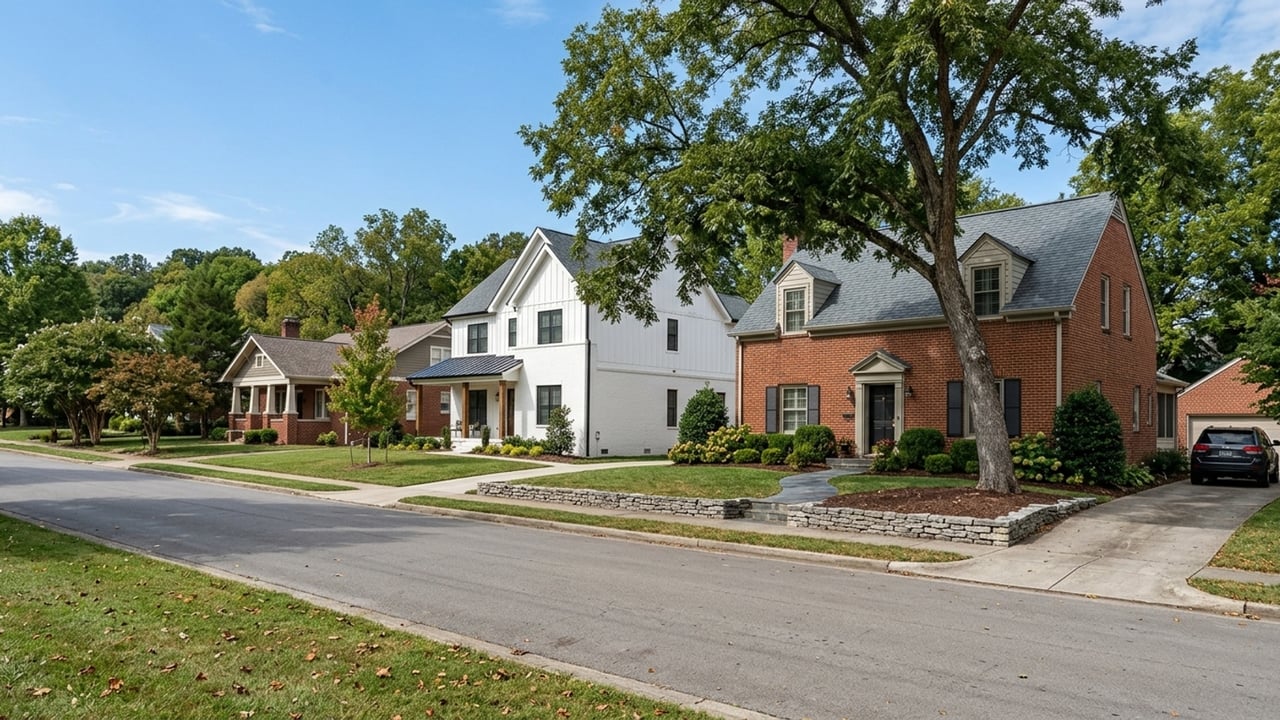
What to Expect From the Cost of Living in Franklin, TN in 2026
Real Estate October 6, 2026
Real Estate October 6, 2026
The median home price in Franklin, TN sits around $862,900 - well above state averages, and the number that tends to stop people mid-conversation when they're comparing it to where they're coming from. If you are weighing the pros and cons of living in Franklin, TN, that figure is probably already on your radar.
Housing is what drives the overall cost here. Groceries run close to national norms, utilities aren't dramatic, and Tennessee's tax structure works in your favor. But the home prices and rents are real, and understanding the full picture before you commit to a search makes the whole process a lot cleaner.
BestPlaces and ERI data place the Franklin cost-of-living index around 139.4 for 2026 - meaning life here runs about 39.4% more expensive than the U.S. average. Compared to the rest of Tennessee, Franklin is roughly 55.1% pricier than the state average.
Different models land in slightly different spots depending on how they weight local housing. HomeSnacks puts the local index at 130 against a Tennessee state average of 90. Payscale shows figures closer to the national baseline, depending on the specific property mix they measure.
Franklin is an expensive place to live by Tennessee standards. The real estate market is doing most of the work on that higher index - other daily costs don't see the same markup. So if you can handle the housing number, the rest of your budget won't feel dramatically out of step with what you're used to.
The median sale price for a home in Franklin recently came in at roughly $862,929. Homes are averaging 49 days on market before closing, and the supply sits at about 3.6 months - with 488 homes sold in a single month in recent data. Properties are selling at 98.2% of list price on average, which tells you buyers are still engaged and offers aren't getting dramatically discounted.
Renters are dealing with above-average costs too. In 2026, average rent estimates range from $1,815 on Apartment List to $2,051 on RentCafe and up to $2,200 on Zumper. Two-bedroom units typically land between $2,100 and $2,230 per month, with the final number depending on the complex and how close it sits to major transit routes.
Franklin's overall cost-of-living index is around 139. Nashville's is roughly 104 - essentially right on top of the national average. That gap is meaningful. Buyers with tighter price points often start their search closer to the Nashville metro before widening out into Williamson County, and it's a reasonable approach.
Average monthly utility costs in Franklin run about $262.69, based on 1,000 kWh of electricity and 5,000 gallons of water usage. That's roughly 5% higher than a typical Tennessee city, with the difference driven primarily by local trash collection fees - not electricity or water rates going haywire.
Groceries are about as unremarkable as it gets. HomeSnacks data puts Franklin's grocery cost index at 101, one point above the national average of 100 and very close to the Tennessee overall average of 99. You're not paying a premium to eat here. That's worth knowing when you're running the numbers.
Tennessee doesn't levy a general income tax on wages. That's a straightforward financial advantage that residents feel in every paycheck, and for a lot of people relocating from higher-tax states, it partially offsets what they're paying on the housing side.
Property taxes and sales taxes are still part of the equation, though. For exact figures on a specific property, go directly to the Williamson County assessor's office - the rate on your actual home is what matters, and that's where you'll find it.
The median household income in Franklin is approximately $106,592, per Census Bureau data cited in a 2025 local economic outlook. Given where housing costs sit, a six-figure household income is pretty standard for the area - it's not an accident that those two numbers exist alongside each other.
What "comfortable" means depends entirely on your housing situation. A renter paying $2,200 a month is running a very different set of calculations than a buyer financing an $860,000 home.
Renters in a two-bedroom can expect to start at roughly $2,200 for rent and $263 for utilities. Stack standard grocery and transportation costs on top of that and you're past $3,000 in basic monthly expenses before you've touched anything discretionary.
Buyers financing a median-priced home are looking at substantially higher monthly obligations. Factor in current interest rates alongside utilities and upkeep, and the gap between renting and owning here is significant.
The inventory situation explains a lot. With 566 available homes and 3.6 months of supply, sellers aren't under pressure. More than 16% of homes recently sold above asking price, and that competition is what keeps the median anchored in the $860,000 range.
Proximity to Nashville matters too. Commuters value the direct highway access, and that sustained demand isn't going anywhere. It's a straightforward supply-and-demand story.
That's a budget question as much as anything else. The market moves fast - homes are going under contract in about 49 days - so buyers who aren't financially prepared to act don't get a lot of second chances.
The expense is the honest drawback. If your price ceiling puts you in limited inventory territory here, it's worth looking at other parts of Tennessee before deciding Franklin is the answer.
For buyers who can absorb the property values, the math on the rest of the cost of living is reasonable. No state income tax, grocery costs that track the national average, and straightforward access to Nashville make the case on a practical level.
It depends on your housing situation. With a median household income of around $106,592 and rent often exceeding $2,100, a six-figure household salary makes covering living expenses much easier.
Housing costs are the primary driver. Strong buyer demand, limited inventory, and a median home price near $862,900 keep the overall cost of living high.
Franklin is more expensive than Nashville. Franklin's cost-of-living index is roughly 139, while Nashville sits around 104 - which is very close to the national average.
It depends on the assessed value of the specific home. Check the Williamson County assessor's office for exact figures on any property you're considering.
Renting is generally cheaper on a monthly basis. Average rents range from $1,815 to $2,200, while financing a median-priced $862,900 home requires a much higher monthly payment.
For buyers who can handle the housing market, yes. Standard grocery and utility costs, no state income tax, and straightforward access to the Nashville metro are the practical arguments in its favor.
Tennessee real estate tips and insights.
Real Estate
Bill Diebenow | October 6, 2026
Real Estate
Bill Diebenow | October 6, 2026
Real Estate
Bill Diebenow | October 6, 2026
Real Estate
Bill Diebenow | October 6, 2026
Real Estate
Bill Diebenow | October 6, 2026
Real Estate
Bill Diebenow | October 6, 2026
Bill's real estate experience spans residential and commercial transactions as an agent, buyer, seller, investor, tenant, landlord, and cross-county corporate relocation. Bill looks forward to understanding your needs, building your trust, and helping you successfully sell your existing home, find your new home, or add to your real estate portfolio.
Bill Diebenow
3990 Hillsboro Pike Suite 320 Nashville TN 37215