The History of Franklin, TN: Origins, Naming, and Local Landmarks
Real Estate October 6, 2026
Real Estate October 6, 2026
Franklin, TN sits about 21 miles south of Nashville and serves as one of the principal cities of the Nashville metropolitan area. It's also, by any reasonable measure, one of the more historically layered places you'll find in Middle Tennessee - and if you're weighing the pros and cons of living in Franklin, that history matters more than you might expect. The median home sale price currently hovers around $863,000, and buyers at that price point tend to want to understand the streets and districts they're walking through before they make any decisions.
Understanding Franklin means looking back to the late 18th century and, more than anything else, to a single brutal November day in 1864. The events that took place here shaped the layout of the streets, the preservation of local architecture, and the identity of Williamson County as a whole. That context doesn't just make for interesting conversation - it directly affects what you can build, what you can modify, and which neighborhoods carry the kind of staying power that tends to hold value.
Abram Maury Jr. officially founded Franklin, Tennessee on October 26, 1799. The city operates as the county seat for Williamson County, anchoring the region's local government and historical records.
That geographic placement was deliberate - a central hub for the surrounding agricultural community. Over time, the area grew into a primary component of the Nashville-Davidson–Murfreesboro–Franklin Metropolitan Statistical Area, and that proximity to Nashville has driven most of the region's modern housing demand. Right now, the local market holds around 566 available homes, with properties spending roughly 49 days on the market before selling. The balance between historic preservation and modern infrastructure shapes which neighborhoods see the most activity, and it's worth knowing the difference before you start touring.
Franklin is an incorporated city and a primary municipality within the Nashville metropolitan area. It has its own local government, city services, and distinct municipal boundaries. It's not a neighborhood of Nashville, though it shares strong economic and transit ties with the larger capital city.
Franklin is located entirely within Williamson County, Tennessee. It holds the designation of county seat, meaning it houses the central courthouse and administrative offices for the county government.
The city of Franklin was named after American Founding Father Benjamin Franklin. Town founder Abram Maury Jr. chose the name out of admiration for the historical figure, but there's a secondary layer to that decision worth knowing.
Maury had a close association with Dr. Hugh Williamson, a member of the Continental Congress - and Williamson was a personal friend of Benjamin Franklin. That relationship influenced both the naming of the town and the naming of the surrounding county. When the state established the local county, it became Williamson County in honor of Dr. Hugh Williamson. So both the city and its parent county trace their names to figures tied to the American Revolution and the Continental Congress, which is a reasonably elegant piece of regional symmetry.
While the name directly honors Benjamin Franklin, the word "Franklin" itself historically referred to a free landholder in medieval England. In the context of this Tennessee city, that older definition is beside the point. Maury intended to honor a prominent national figure, not invoke any old English land tenure concept.
The most defining historical event in the area was the Battle of Franklin, fought on November 30, 1864. One of the bloodiest engagements of the entire Civil War, it permanently altered the local landscape in ways you can still see today.
The battle produced more than 8,000 casualties in a single day. That volume of wounded soldiers meant residents had to convert nearly every home and commercial building in town into a temporary hospital. The physical toll on structures and land dictated much of the rebuilding that followed over the next several decades. Modern development still works around the protected areas that remain from that era, and local zoning reflects it - new construction and 19th-century preservation coexist here in a way you don't see in most suburban markets.
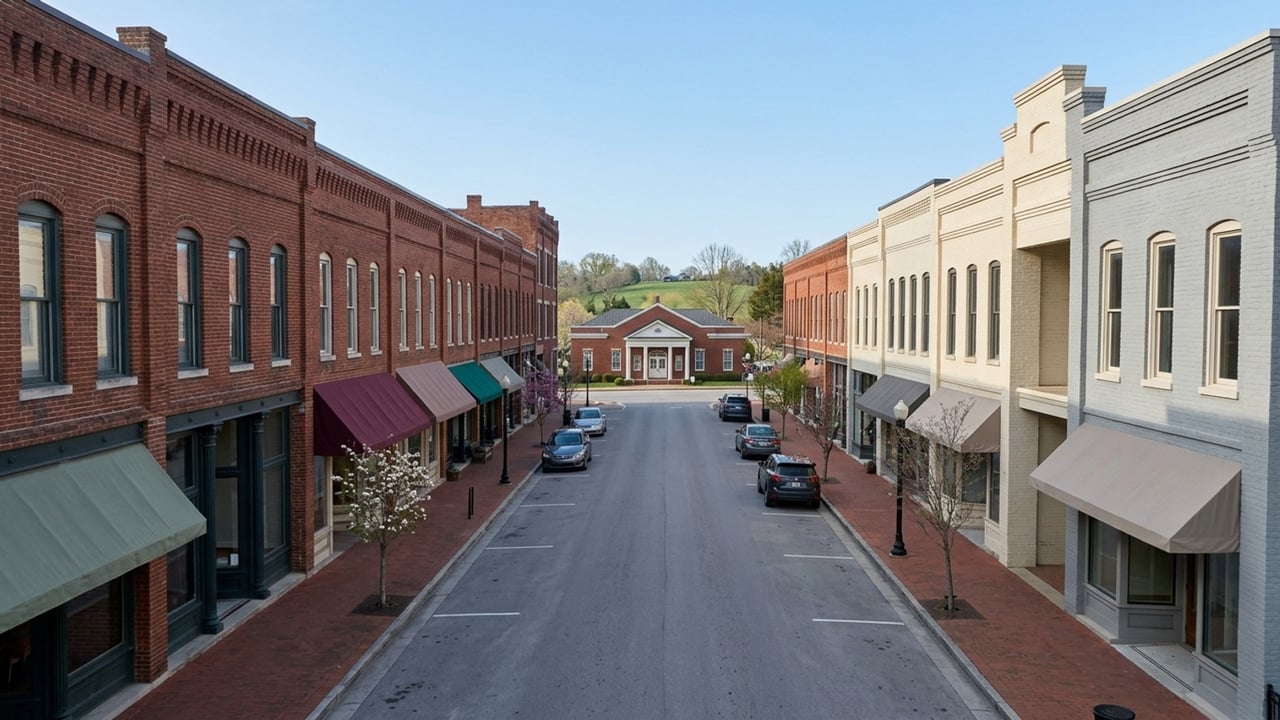
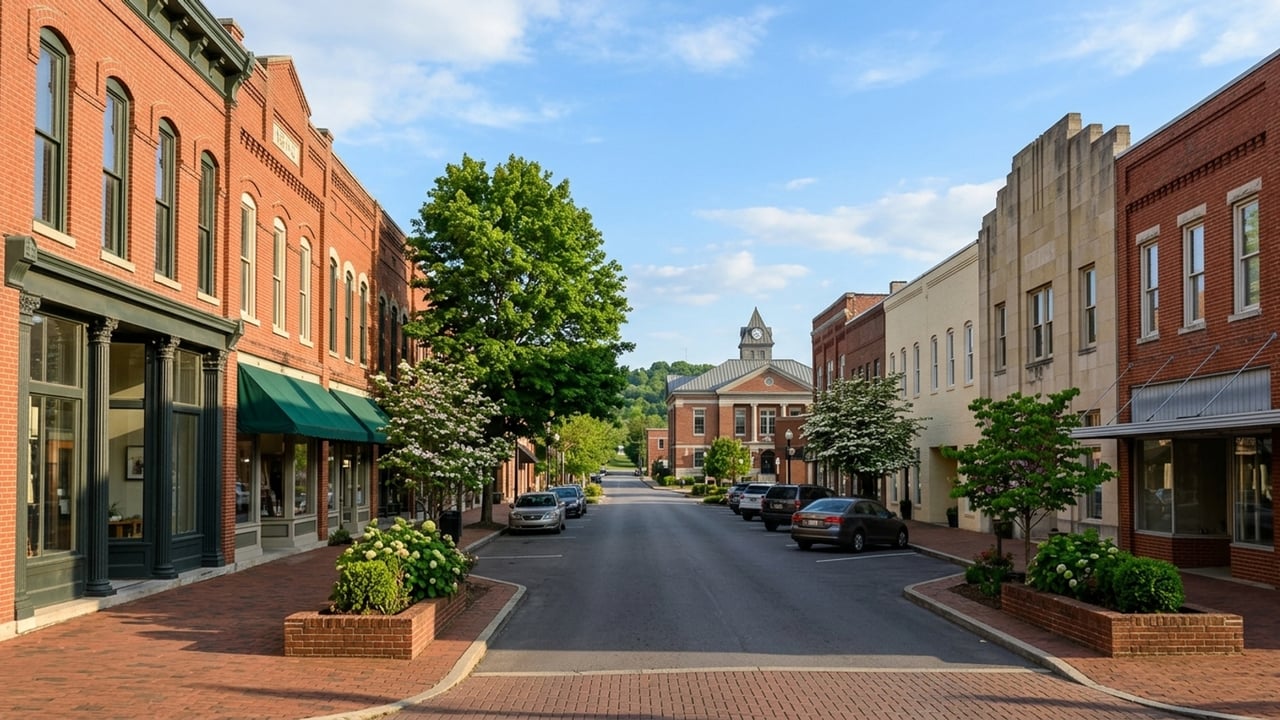
After its founding in 1799, Franklin grew steadily as a regional center for Williamson County. The original grid laid out by Abram Maury Jr. formed the core of what is now the downtown district - and you can still read that original plan in the streets.
As the Nashville metropolitan area expanded southward, Franklin transitioned from a standalone agricultural hub into a major suburban city. New housing developments and commercial centers followed, though local zoning has kept the historical character of the original downtown largely intact.
The Franklin Battlefield is the defining historic landmark for the region. It carries the designation of a U.S. National Historic Landmark District, protecting the site of the 1864 Second Battle of Franklin - and that designation has real consequences for anyone buying nearby.
The centerpiece of the former Union position is the Carter House. The structure survived the fighting but still shows hundreds of bullet holes from the battle, which makes it one of the more visceral pieces of preserved Civil War architecture you'll encounter anywhere. Properties near the national historic landmark district tend to draw strong buyer interest - homes in this broader market are selling for roughly 98 percent of their asking price, and listings near these protected sites don't tend to sit long.
The local history of the 1864 conflict is preserved through several historic house museums. The Carter House operates as a Tennessee Historical Commission State Historic Site, managed by The Battle of Franklin Trust.
Nearby, the Carnton Plantation also functions as a Civil War history museum documenting the battle and its aftermath. Both sites are open to the public and give residents and visitors a detailed look at 19th-century architecture and the history of the region.
Franklin is best known historically for the Battle of Franklin and the extensive preservation of its Civil War sites. That reputation draws historians, tourists, and new residents to Williamson County year after year.
Beyond the battlefield, the city carries weight as a major economic and residential center south of Nashville. Sites like the Carter House and Carnton Plantation give the area a visual identity that's genuinely distinct from other modern suburbs - you're not looking at a place that was built from scratch in 1995. That combination of preserved history and modern amenities has produced a high-demand housing market, with median home prices up roughly 12 percent year-over-year. Buyers consistently show up looking for Nashville proximity alongside access to something that has a past.
Franklin is best known for the Battle of Franklin, a major Civil War conflict fought on November 30, 1864. The battle resulted in over 8,000 casualties and required residents to use nearly every local building as a temporary hospital. Today, the city is widely recognized for preserving these historic sites.
Franklin is located in Williamson County, Tennessee. It serves as the county seat and houses the central administrative offices for the region.
Town founder Abram Maury Jr. named the city after Founding Father Benjamin Franklin. The choice was influenced by Maury's association with Dr. Hugh Williamson, who was a close associate of Benjamin Franklin.
Franklin, Tennessee was founded on October 26, 1799, established by Abram Maury Jr. as the central hub for the surrounding county.
Franklin is an incorporated city. It operates as one of the principal cities within the Nashville-Davidson–Murfreesboro–Franklin Metropolitan Statistical Area.
Yes. Properties within designated historic areas typically face specific zoning overlays, and those rules aren't always obvious from a standard listing. If you're looking near sites like the Carter House or the Franklin Battlefield, consult local zoning guidelines before you start planning any exterior modifications.
Both cities operate as major residential centers south of Nashville, but Franklin maintains a distinct visual identity tied to its 19th-century architecture. Buyers evaluating the differences between Franklin and Brentwood often prefer this market for its preserved historic downtown grid and protected Civil War sites.
Tennessee real estate tips and insights.
Real Estate
Bill Diebenow | October 6, 2026
Real Estate
Bill Diebenow | October 6, 2026
Real Estate
Bill Diebenow | October 6, 2026
Real Estate
Bill Diebenow | October 6, 2026
Bill Diebenow | October 6, 2026
Real Estate
Bill Diebenow | October 6, 2026
Bill's real estate experience spans residential and commercial transactions as an agent, buyer, seller, investor, tenant, landlord, and cross-county corporate relocation. Bill looks forward to understanding your needs, building your trust, and helping you successfully sell your existing home, find your new home, or add to your real estate portfolio.

Bill Diebenow
3990 Hillsboro Pike Suite 320 Nashville TN 37215