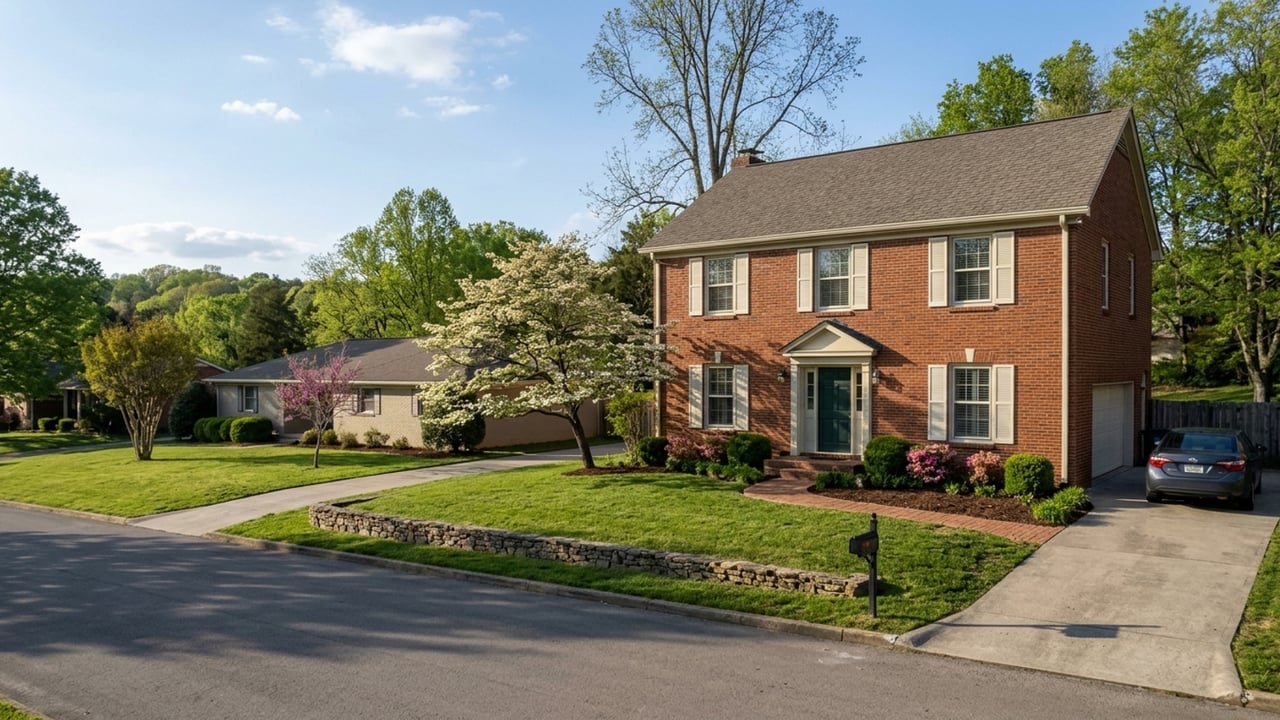
How to Increase Home Value in Franklin, TN Before Selling
Pricing November 12, 2026
Pricing November 12, 2026
What raises your sale price in Franklin depends entirely on what you own. Single-family homes are gaining roughly 14.8% a year, with nearly one in five selling above list price. Condos are a different story: 12 months of supply and a price drop based on 20 recent sales. The goal there is out-competing other listings on condition and price, not chasing a renovation payoff that the market won't support.
If you own a single-family house in Franklin, the best way to raise your sale price is to price it against recent nearby sales and fix what a buyer's inspection will flag, rather than starting a big remodel. With just 3.5 months of supply in the 90 days ending September 30, 2026, buyers are already competing for well-kept houses. If you own a condo, supply is far higher and prices have slipped, so condition and a sharp price matter more than expensive upgrades.
You own a home in Franklin and are deciding which repairs, updates, or larger projects are worth paying for before you sell.
Houses are in a seller's market where prep and pricing do the heavy lifting. In the 90 days ending September 30, 2026, 19.3% of single-family homes sold above their list price.
Condos face heavy competition where your unit's condition and price decide the sale. About 5% of condos sold above list during that same window, though that figure is based on just 20 sales.
Buyers approach these property types differently. You can review Franklin market trends and price history for a deeper look at how demand shifts across the city.
This is the strongest-moving segment in the city. A rising market lifts every house, including the unrenovated one down the street, which makes a remodel's added value hard to separate from general market gains.
The typical Franklin house sold for nearly $970,000 in the 90 days ending September 2026, up almost 15% in a year. At that price point, buyers expect move-in condition, and the spending case is for fixes and presentation that remove their reasons to negotiate. The downside: buyers near the top of their loan approval face an appraisal gap if you over-improve, and that gap usually lands on you as a price cut.
Prices have risen, but buyers take their time and rarely bid over asking. Townhouses sat for a median of 82 days on market recently, with only 5.5% selling above list. The value gain here comes from shortening your wait with clean presentation and a price that matches recent townhouse sales, not spending on upgrades buyers won't compete for.
What you give up with an inflated price is time. Nearly three months on the market means carrying costs, your mortgage, HOA dues, and utilities add up. A month of extra waiting can cost more than a modest price adjustment would have.
Prices fell in this segment and sales are slow. Condo prices dropped year over year and sat for a median of 85 days on the market, though this is based on only 20 recent condo sales.
When buyers have this much choice, they compare your unit against many others and can afford to wait. Upgrades rarely get paid for in full under those conditions. There's also an appraisal problem: recent comparable sales are lower, so an appraiser may not support a price that reflects a fresh renovation, and a buyer's lender could then cap the deal below what you spent.
Deciding where to spend your budget comes down to your timeline and property type.
Start by identifying what you own. Houses go to the single-family prep section, while condos and townhouses go to the attached-home section, because the market for each is moving differently. Then ask when you're listing. Listing within the next year points to the prep sections, while holding longer makes kitchen remodels and adding square footage worth reading. Finally, consider whether your project changes the exterior or adds finished space. If yes, read the permits and approvals section before getting bids, or read about selling as-is if you'd rather take a cash offer than go the MLS route.
The biggest value gain comes from a price grounded in closed sales from your subdivision and comparable homes nearby. You should compare your list price against closed sales, not current asking prices or online estimates. You can review the steps for selling a home in Franklin, TN as you prepare to list.
Even in a rising market, the typical house closes at about 98% of list price. An inflated list price usually ends in a reduction rather than a higher sale.
Pricing accurately from day one draws buyers in while your listing is fresh. Buyers working with agents will see the same comparable sales your agent pulls, so there's no hiding an inflated number.
Price right where the data suggests and you invite competition. Buyers know they need to act fast on a well-priced house in a market with just 3.5 months of supply. Overshooting tends to cost more in days on the market and buyer negotiating power than it gains, even though pricing to recent sales can feel like leaving money on the table when the market is this strong.
Roof, HVAC, water intrusion, grading, and electrical issues turn into repair requests or credits after the inspection. A pre-listing inspection lets you address these before a buyer ever sees the house.
Under Tennessee Code § 66-5-202, you must provide a property disclosure statement detailing known material defects unless the buyer waives it for a disclaimer. Once you know about a defect, Tennessee's disclosure rules generally mean you can't sell around it without disclosing. Get at least two written contractor bids before deciding whether to fix an issue or offer a credit. Big-ticket fixes like a roof or HVAC system rarely raise the price above comparable homes; they mostly stop the price from dropping. The payoff is a smoother sale.
Neutral paint, repaired flooring, updated light fixtures, a clean front entry, and tidy landscaping are low-cost changes that show up well in listing photos and signal to buyers that the home has been cared for.
Regional data shows that replacing a garage door in the Nashville area recouped 182.6% of its cost at resale. A steel entry door replacement recouped 136.5%. One thing to check first: many Franklin subdivisions require HOA architectural approval before you change exterior paint colors, doors, or landscaping. Ask your HOA for its review rules and approval timeline before you buy a single material.
With 80 condos for sale recently and roughly 12 months of supply, buyers shortlist on price and condition. They have plenty of time and options.
Value here comes from pricing against the most recent closed sales in your complex and nearby complexes, then making your unit the cleanest, best-presented option at that price.
When buyers have a dozen similar units to choose from, they'll immediately dismiss the one priced above the rest. A price cut after weeks on the market signals weakness. Pricing right at launch protects more value than a later reduction does.
The catch is that supply this heavy may mean pricing below the last sale in your complex to stand out. That can feel like giving up value you already had, but it keeps your listing from going stale.
Buyers and lenders scrutinize the association's dues, reserves, special assessments, and rental rules. Tennessee's Residential Property Disclosure Act requires you to disclose whether a property is part of a homeowners association. Whether your complex is FHA-approved can decide whether a large share of buyers can finance it at all.
Ask your HOA for current dues, the latest reserve study, and any planned special assessment before listing, and check whether your complex appears on HUD's FHA-approved list. Low reserves or a pending special assessment will surface in the documents either way. Getting them early just lets you price for it instead of renegotiating after a buyer finds it.
Major renovations make the most sense if you plan to stay in the home for several years before selling. They can also raise your assessed value at reappraisal, which affects your property tax bill. When you do decide to upgrade, focus on matching the standard of your specific subdivision. Overbuilding for your neighborhood rarely returns your investment at the closing table.
A refresh that brings a dated kitchen up to the neighborhood standard is easier to recoup than one that pushes past it. Regional data for the Nashville area shows a midrange minor kitchen remodel recouped 103.2% of its cost at resale. A midrange bathroom remodel recouped 95.8%. Before committing, ask for recent sales in your subdivision with and without the feature you plan to add.
Remodels take weeks to months to complete. If you're listing within the year, the disruption and carrying cost eat into whatever value they add.
At Franklin's median house price per square foot, 300 finished square feet works out to roughly $99,600 on paper (300 × $332). Treat that as a ceiling rather than a promise.
Appraisers value space by its type and quality. A bonus room or finished basement isn't valued exactly like main-floor living area. The per-foot figure is also a citywide median for whole homes, and construction costs per foot can exceed it. Unpermitted space may not count at appraisal at all.
The City of Franklin requires a building permit for all new construction, additions, renovations, decks, pools, and most repair work. If the cost of the work exceeds $25,000, a Tennessee-licensed contractor must pull the permit.
Exterior changes in Franklin's historic overlay can require approval from the Historic Zoning Commission before work starts. Confirm whether your address falls inside this overlay using the city's zoning map, and look up past permits on your property with the City of Franklin to verify that earlier additions were permitted. Work done without the right permit or approval can surface during a buyer's due diligence and delay closing or force a price concession. Approval time also adds to any project timeline.
Compare your project cost against a comparable-sales valuation before committing to the work. It's easy to spend $30,000 on a renovation that only adds $15,000 in appraisal value.
If you want to skip the prep work entirely, you can weigh a cash offer against an MLS listing to see what makes the most financial sense. Pulling recent sales for your subdivision and talking through which projects make sense before you list puts the numbers in front of you so the decision is a lot clearer.
These figures represent citywide medians, not the specific value of your home.
The median sale price for all homes in Franklin is roughly $863,089, covering the 90 days ending September 30, 2026. Check the at-a-glance list above to see how prices split between houses, townhouses, and condos.
Demand continues to outpace a limited supply of homes for sale. All-homes prices rose 12.8% year over year in the 90 days ending September 30, 2026. You can review your property tax bill and other expenses to see how this impacts broader costs.
The median is 50 days on the market for a single-family house. Attached homes take longer, as shown in the at-a-glance list. This measurement tracks the days until a home goes under contract, not the final closing date.
Yes. The Williamson County Property Assessor adds the value of new improvements to your home's assessed value. Contact the assessor's office about a planned project and review your property tax bill to understand the rates.
There's no official month-by-month seasonal data published specifically for Williamson County. Greater Nashville Realtors only releases county-level single-family and condo closing data on a quarterly basis. Ask your agent for monthly closed-sales counts for your specific subdivision over the past two years to spot the best timing.
It depends on repair costs compared to the price difference between updated and un-updated homes. Compare written repair bids against comparable sales to see if the math makes sense. Tennessee Code § 66-5-202 still requires disclosure of known material defects unless the buyer waives the full disclosure statement.
Tennessee real estate tips and insights.
Middle TN
Bill Diebenow | November 12, 2026
Pricing
Bill Diebenow | November 12, 2026
Home
Bill Diebenow | November 12, 2026
Home
Bill Diebenow | November 12, 2026
Home
Bill Diebenow | November 12, 2026
Search
Bill Diebenow | November 12, 2026
Bill's real estate experience spans residential and commercial transactions as an agent, buyer, seller, investor, tenant, landlord, and cross-county corporate relocation. Bill looks forward to understanding your needs, building your trust, and helping you successfully sell your existing home, find your new home, or add to your real estate portfolio.
Bill Diebenow
3990 Hillsboro Pike Suite 320 Nashville TN 37215